Fountain Pens
The best flex nib fountain pens for beginners
Line that goes thin to thick as you press. Here is what flex actually is, what it costs, and why almost every affordable option comes from a single maker.
How this page is funded. Buying through a link here earns us a commission at no extra cost to you. It does not change what we recommend or the order we recommend it in, and we have not hands-on tested these products — see how we choose and the full disclosure.
A flex nib has tines that spread apart under pressure. Press on a downstroke and the line goes broad; release on an upstroke and it goes thin. That contrast is what gives old copperplate handwriting its look, and for most of the last century getting it meant a vintage pen or an expensive modern one.
That has changed at the cheap end, and this page is about what is actually available there — including the uncomfortable fact of how few makers are involved.
Flex, soft, and bent are three different things
| Type | How the width changes | What you control |
|---|---|---|
| Flex | The tines spread apart under downward pressure | Pressure |
| Soft / semi-flex | The tines give slightly, far less than a true flex | Pressure, subtly |
| Fude (bent) | The nib is bent upward, so the contact area changes | The angle you hold the pen at |
| Stub / italic | The tip is ground wide and flat, so it is fixed | Nothing — the variation is directional |
That distinction matters for buying. A stub gives you variation with no technique at all, because it comes from the shape rather than from you. A fude gives you an enormous range but you steer it with your wrist angle. Only a flex nib responds to pressure the way the word implies.
How we ranked these
By the unflexed line width, narrowest first — and that is a deliberate choice worth explaining. Flex pens are usually sold on how wide they go, and no maker on this page publishes that figure. What they do publish is where the line starts before you press.
That starting width is also the more useful number, because it decides whether the pen is usable when you are not doing calligraphy. A pen that writes a 0.3 mm line at rest is a pen you can take notes with. One that starts at 0.7 mm is a specialist tool.
Quick picks
Ranked for the beginner buying their first setup. Every pick names who it is wrong for.
| # | Product | Best for | Price |
|---|---|---|---|
| 1 |  Noodler's Creaper Flex The narrowest of the cheap flex pens at a published 0.3 mm, which is the only one of the three that behaves like an ordinary fine nib when you are not pressing. | Flex you can still take notes with | $29.45 · View on Amazon #ad Price as of October 20, 2026. How this is funded |
| 2 |  Noodler's Konrad Flex The same flex idea as the Ahab in a slimmer body, starting from a published 0.5 mm line rather than 0.7 mm. | The middle of the flex range | $29.95 · View on Amazon #ad Price as of October 20, 2026. How this is funded |
| 3 |  Noodler's Ahab Flex A large piston-filling pen with a steel flex nib and a published 0.7 mm line, which is the broadest starting point in the cheap flex range. | The widest line variation for the money | |
| 4 | 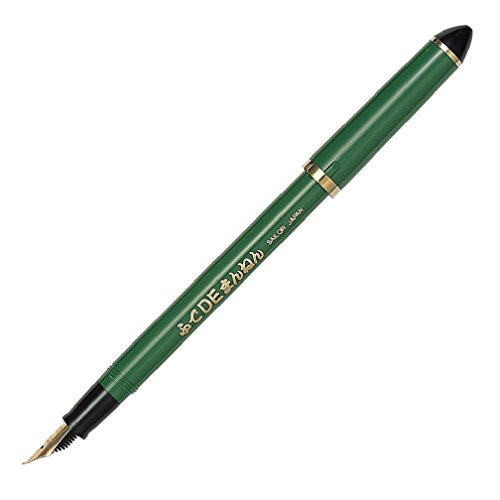 Sailor Fude De Mannen A nib bent upward at a stated angle, so tilting the pen changes the stroke from hairline to broad. Nothing else this cheap does it. | Line variation without learning calligraphy | $13.90 · View on Amazon #ad Price as of October 20, 2026. How this is funded |
1. Flex you can still take notes with
Noodler's Creaper Flex
The narrowest of the cheap flex pens at a published 0.3 mm, which is the only one of the three that behaves like an ordinary fine nib when you are not pressing.
#ad Price as of October 20, 2026. How this is funded
At a published 0.3 mm unflexed, the Creaper starts exactly where a Pilot Kakuno Fine and a Sailor Lecoule start. That is the useful fact about it: unpressed, it is an ordinary fine nib, and the flex is there when you want it.
For a beginner curious about line variation without giving up a usable everyday pen, this is the one of the three to buy.
It is the smallest and lightest of the range, which suits smaller hands and works against anyone who likes a substantial pen.
| Nib | Steel flex nibSource: Noodler's Creaper Flex (retail listing, read 2026-09-01) |
|---|---|
| Line size | 0.3 mmStated in the listing's own product attributes, unflexed — the same figure Pilot and Sailor publish for their Fine nibs.Source: Noodler's Creaper Flex (retail listing, read 2026-09-01) |
| Filling | Piston fillSource: Noodler's Creaper Flex (retail listing, read 2026-09-01) |
| Published maximum flexed width | Not published |
What it does well
- Published 0.3 mm unflexed line — usable for ordinary writing
- The cheapest way into flex without buying a specialist-only pen
- Light and small
What it does not
- No cartridge option
- No published figure for the flexed width
- Least dramatic variation of the three
Skip this if line variation is the whole point of the purchase — the wider Ahab gives a more obvious contrast between thin and thick.
2. The middle of the flex range
Noodler's Konrad Flex
The same flex idea as the Ahab in a slimmer body, starting from a published 0.5 mm line rather than 0.7 mm.
#ad Price as of October 20, 2026. How this is funded
The Konrad sits between the Ahab and the Creaper on both size and starting line width, which makes it the sensible middle choice if you want flex but also want the pen to be usable for ordinary writing.
A 0.5 mm unflexed line is roughly a Western medium. You can take notes with it and still get visible variation when you press on a downstroke.
Like the rest of the range it is a piston filler, so budget for a bottle at the same time.
| Nib | Steel flex nibSource: Noodler's Konrad Flex (retail listing, read 2026-09-01) |
|---|---|
| Line size | 0.5 mmStated in the listing's own product attributes, unflexed.Source: Noodler's Konrad Flex (retail listing, read 2026-09-01) |
| Filling | Piston fillSource: Noodler's Konrad Flex (retail listing, read 2026-09-01) |
| Published maximum flexed width | Not published |
What it does well
- Published unflexed line width
- Narrower starting line than the Ahab, so it doubles as a writing pen
- Slimmer body than the Ahab
What it does not
- No cartridge option
- No published figure for the flexed width
- Still a specialist nib rather than an everyday one
Skip this if you have never used a fountain pen at all — learn on a rigid nib first, because flex rewards a hand that already knows what normal pressure feels like.
3. The widest line variation for the money
Noodler's Ahab Flex
A large piston-filling pen with a steel flex nib and a published 0.7 mm line, which is the broadest starting point in the cheap flex range.
A flex nib has tines that spread apart when you press, so a downstroke goes broad and an upstroke stays thin. That is the line variation people associate with old copperplate handwriting, and until recently it meant a vintage pen or a very expensive modern one.
The Ahab is the largest of the three cheap Noodler's flex pens and starts from the widest unflexed line at a published 0.7 mm. If you want the most dramatic contrast between thin and thick, this is the one to start from.
It is a piston filler with no cartridge option, so it needs a bottle of ink before it will write at all.
| Nib | Steel flex nibSource: Noodler's Ahab Flex (retail listing, read 2026-09-01) |
|---|---|
| Line size | 0.7 mmStated in the listing's own product attributes. This is the unflexed line — the point of a flex nib is that pressure widens it.Source: Noodler's Ahab Flex (retail listing, read 2026-09-01) |
| Filling | Piston fillSource: Noodler's Ahab Flex (retail listing, read 2026-09-01) |
| Published maximum flexed width | Not published |
What it does well
- The listing publishes an unflexed line width, which is rare at any price
- Large ink capacity from the piston barrel
- The broadest starting line of the affordable flex pens
What it does not
- No cartridge option — a bottle is compulsory
- Nobody publishes how wide the nib goes when flexed
- A 0.7 mm starting line is already wide for everyday notes
Skip this if you want one pen for ordinary writing. A 0.7 mm line before you even press is wider than most people want for a page of notes.
4. Line variation without learning calligraphy
Sailor Fude De Mannen
A nib bent upward at a stated angle, so tilting the pen changes the stroke from hairline to broad. Nothing else this cheap does it.
#ad Price as of October 20, 2026. How this is funded
A fude nib is bent upward near the tip, which means the width of your line depends on how steeply you hold the pen. Held almost flat it lays a broad stroke; tipped up onto the very end of the bend it writes a hairline. One pen, an enormous range.
Sailor publishes the bend angle rather than a width, which is the honest way to describe a nib whose width is a function of how you hold it. The 55-degree version has the more dramatic range; the 40-degree is closer to an ordinary pen with extra headroom.
It is not a first pen, and we are not ranking it as one. It is the pen to buy second, when the question has changed from whether you like fountain pens to what else they can do.
| Nib angle | 55 degreesSailor names the pen by the angle. A 40-degree version is sold as a separate product.Source: Sailor Fude De Mannen, 55 degrees (retail listing, read 2026-09-01) |
|---|---|
| Also offered | 40-degree nib angle, a shallower bendSource: Sailor Fude De Mannen, 40 degrees (retail listing, read 2026-09-01) |
| Filling | Sailor cartridge; Sailor sells its own converter separatelySource: Sailor fountain pen converter (retail listing, read 2026-09-01) |
| Line width in mm | Not published |
What it does well
- Genuine line variation from ordinary handwriting
- The maker publishes the nib angle, which is the meaningful figure here
- Cheap enough to be an experiment rather than a commitment
What it does not
- Not a general-purpose writing nib
- Wide strokes put down a lot of ink, so thin paper suffers
- Sailor's own cartridge, and a converter sold separately
Skip this as a first pen. A bent nib rewards a hand that already knows what a normal one feels like, and on cheap paper the broad strokes will bleed.
What nobody publishes
How wide the line gets at full flex. Not one of these listings states it, and neither does any maker page we could retrieve. So this site does not print a figure for it, and any site that does is estimating.
Also unpublished: how much pressure it takes, and how many strokes the nib will take before it stops springing back. Those are real questions and we have no sourced answer to either.
The mechanical limits, which are not opinions
Two things follow from how a flex nib works, and they apply to every flex pen regardless of brand.
- You have to write slowly. Spreading the tines widens the line, which means more ink per centimeter. If you move faster than the feed can supply, the line splits into two rails with a gap between — the condition described under railroading in troubleshooting. This is physics, not a defect.
- Wide strokes need good paper. A flexed downstroke puts down several times the ink of a normal line. On 70 gsm uncoated paper it will bleed through, and on absorbent stock it will feather into a blur.
Who this is actually for
Not a first pen, and we would say that even about the narrowest one here. Flex rewards a hand that already knows what normal pressure feels like, because the whole technique is about deliberately departing from it.
Buy one as a second or third pen, once you have decided you like writing with a nib and want to find out what else it can do. If you are still at the first-purchase stage, start with the beginner roundup and come back.
What to pair with it
- Paper that can take a wide wet stroke — 90 gsm and up. The notebook roundup covers the options, and coated paper suits flex particularly well because the line stays crisp.
- A bottle of ink, because every Noodler's pen here is a piston filler with no cartridge option. A well-behaved everyday ink is the right start — see inks for beginners.
- Patience. Slower than your normal handwriting, by design.
- A reality check on mechanism. Flex is only one of the ways a pen varies its line - the calligraphy roundup compares it against stub nibs and parallel plates, which need far less technique.
Questions people actually ask
What is a flex nib fountain pen?
One whose tines spread apart when you press, so a downstroke writes broad and an upstroke writes thin. That pressure-driven line variation is what distinguishes it from a stub nib, where the variation comes from a fixed ground shape.
What is the best flex nib pen for a beginner?
The Noodler's Creaper, on published figures: it starts from a 0.3 mm unflexed line, which is the same width Pilot and Sailor publish for their Fine nibs, so it still works as an ordinary writing pen when you are not flexing.
How wide does a flex nib go when you press?
No maker on this page publishes that figure, so we do not print one. What they publish is the unflexed line width, which is why we rank on that instead.
Why does my flex pen produce two thin lines instead of one thick one?
That is railroading: the tines have spread wider than the feed can supply ink to, usually because you are writing too fast. Slow down, or use a wetter ink — see troubleshooting.
Is a fude nib the same as a flex nib?
No. A fude nib is bent upward so the line width depends on the angle you hold the pen at, not on how hard you press. Both give line variation; only flex responds to pressure.
Do I need special paper for a flex nib?
Better paper than usual, yes. A flexed stroke lays down several times the ink of a normal line, so thin paper will bleed through. 90 gsm and above is the safe range.