Guides
Bleeding, ghosting and feathering
Three separate problems, three separate causes, three separate fixes. Almost everyone calls all of them bleeding.
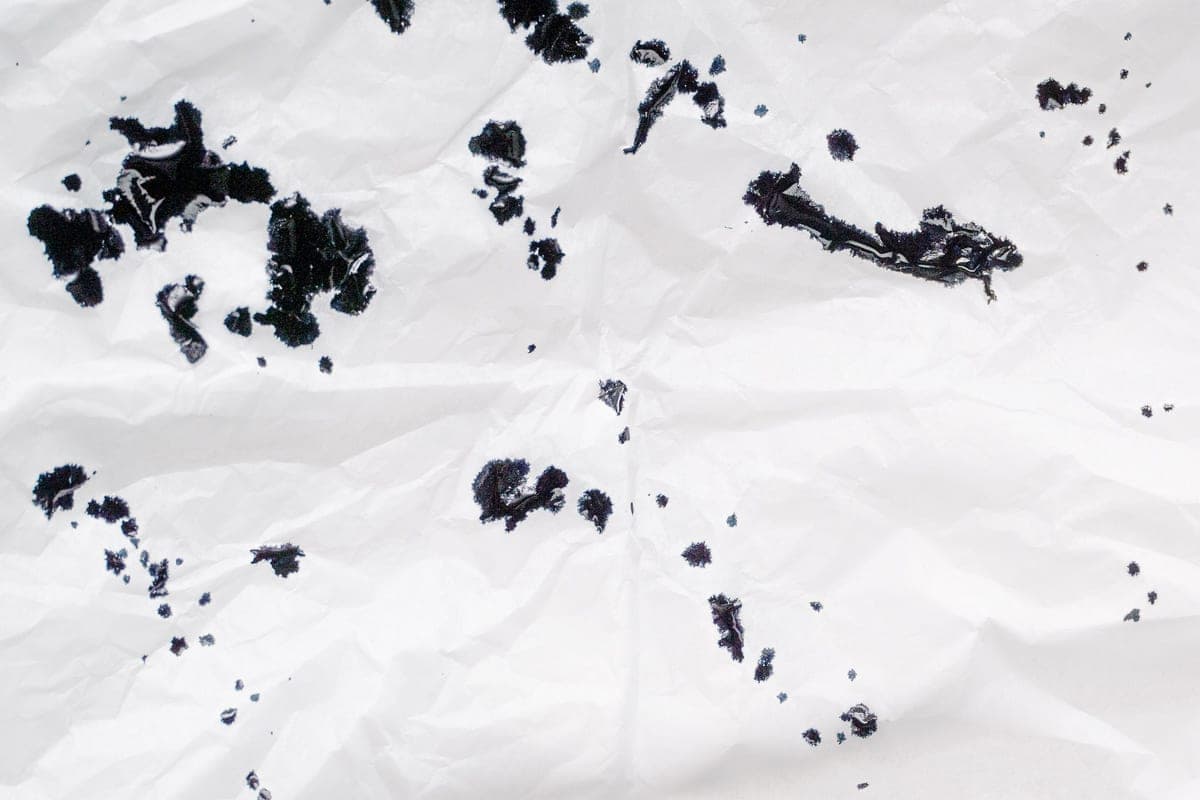
These three get used interchangeably, and that matters because they have different causes and different fixes. Buying a heavier notebook to solve feathering, for instance, may not help at all.
Feathering
What it looks like
The line has furry edges. Look closely and you can see thin tendrils of ink running out from the stroke, following the direction of the paper fibers. In bad cases the loops of letters fill in and the writing becomes a smudge.
What causes it
Ink wicking sideways along exposed paper fibers. It is a surface phenomenon: the ink has not gone through the sheet, it has spread across it. Lightly sized, uncoated paper is the main cause, and a wet ink or a broad nib makes it worse by supplying more liquid.
The fix
- Coated or heavily sized paper stops it almost completely — Clairefontaine at a published 90 g/m2 is the reference.
- A narrower nib reduces it substantially.
- A drier ink reduces it — see inks for cheap paper.
- Writing faster reduces it, because less contact time means less absorption.
Ghosting
What it looks like
You can read the writing from the reverse of the page, but if you run a finger over it there is no ink there. On very thin paper it can be strong enough to be distracting even though nothing has come through.
What causes it
Paper opacity, and nothing else. A thin or translucent sheet lets you see through it. Tomoe River at a published 52 g/m2 ghosts heavily by design and does not bleed at all, which is the clearest demonstration that these are two different properties.
The fix
Thicker or more opaque paper, and nothing else. Changing your ink or nib will not meaningfully reduce ghosting. It is also worth deciding whether it actually bothers you: ghosting is cosmetic, and plenty of people find it attractive.
Bleeding
What it looks like
Ink on the reverse of the page that you can feel. Often it appears as dots at the points where the nib paused, changed direction or crossed its own line, because those are where the most ink was deposited.
What causes it
More liquid arriving than the paper can hold at its surface. Three inputs decide it: how absorbent the paper is, how wide the nib is, and how wet the ink is — in that order of importance.
The fix
- Change the paper. Moving from 70 gsm uncoated to 90 gsm coated resolves it with almost any pen and ink. Much the largest lever.
- Change the nib. A Fine puts down noticeably less ink than a Medium.
- Change the ink. A dry or pigment ink helps — see inks that do not bleed.
Quick picks
Ranked for the beginner buying their first setup. Every pick names who it is wrong for.
| # | Product | Best for | Price |
|---|---|---|---|
| 1 | 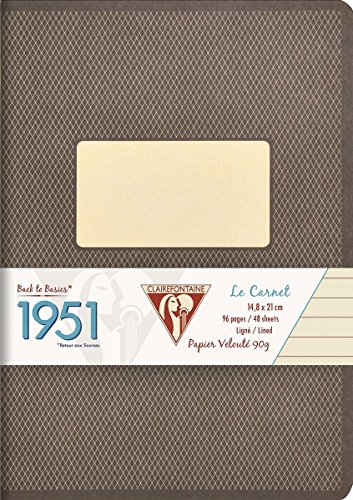 Clairefontaine 1951 A5, lined 90 g/m2 vellum in a stapled softcover, which is the cheapest place to find paper this good. | The best paper per dollar | $9.99 · View on Amazon #ad Price as of October 18, 2026. How this is funded |
| 2 |  Pelikan 4001 Royal Blue, 62.5 ml A dry-writing classic that lays down less ink than most, which is exactly what cheap paper needs. | Thin, absorbent paper |
1. The best paper per dollar
Clairefontaine 1951 A5, lined
90 g/m2 vellum in a stapled softcover, which is the cheapest place to find paper this good.
#ad Price as of October 18, 2026. How this is funded
This is the paper that makes the case on its own. 90 g/m2 coated vellum is the benchmark the rest of the market is measured against, and here it comes in a stapled book that costs less than a takeout lunch.
The softcover is the compromise. It will not survive being thrown in a bag for a year the way a hardcover will.
If you want to know whether your bleed-through problem is the ink or the paper, buy one of these and write the same page again. The answer is usually immediate.
| Paper weight | 90 g/m2 white velvet vellumSource: Clairefontaine 1951 A5 (retail listing, read 2026-09-01) |
|---|---|
| Maker's claim | Remarkable opacity and strengthThe maker's own wording on its listing.Source: Clairefontaine 1951 A5 (retail listing, read 2026-09-01) |
| Size and extent | 5 3/4" x 8 1/4", 96 pages, linedSource: Clairefontaine 1951 A5 (retail listing, read 2026-09-01) |
| Binding | Staplebound softcoverSource: Clairefontaine 1951 A5 (retail listing, read 2026-09-01) |
What it does well
- Published 90 g/m2 weight at a very low price
- The reference paper for fountain pen use
- Cheap enough to keep several
What it does not
- Softcover, so it wears in a bag
- 96 pages goes quickly
- Slow drying, like all coated paper
Skip this if you need a book that survives daily carry — buy the clothbound version instead.
2. Thin, absorbent paper
Pelikan 4001 Royal Blue, 62.5 ml
A dry-writing classic that lays down less ink than most, which is exactly what cheap paper needs.
A dry ink is not a defect. Less ink leaving the nib per centimeter of line means less ink for absorbent paper to wick sideways, which is why a dry ink on bad paper often looks sharper than a wet ink on good paper.
4001 is the reference point for that behavior. If you are stuck writing on photocopier paper or a school notebook, this is the pairing that has the best chance of staying crisp.
The trade is on good paper, where a dry ink can feel scratchy and looks thin next to something more saturated.
| Format | 62.5 ml bottleSource: Pelikan 4001 Royal Blue (retail listing, read 2026-09-01) |
|---|---|
| Range | 4001, Pelikan's long-running everyday ink lineSource: Pelikan 4001 Royal Blue (retail listing, read 2026-09-01) |
| Published drying time | Not published |
| Published water resistance | Not published |
What it does well
- Runs dry, which suits thin and absorbent paper
- Large bottle for the money
- Long-established formula that is easy to replace anywhere
What it does not
- Can feel scratchy in an already-dry pen
- Color is pale next to modern saturated inks
- No published figures for drying or water resistance
Skip this if your pen already writes dry — pairing a dry ink with a dry nib is how people conclude they hate fountain pens.
Diagnosing yours in two minutes
| Symptom | Problem | First thing to change |
|---|---|---|
| Fuzzy edges on the line, front of the page | Feathering | Paper, or a narrower nib |
| Visible writing on the back, no ink to touch | Ghosting | Paper opacity, or accept it |
| Ink you can feel on the back | Bleeding | Paper weight and sizing |
| Dots on the back only where you paused | Bleeding, mild | Nib width or ink |
| All three at once | The paper | Buy one good notebook and retest |
The two-minute version: write the same sentence on the paper you are complaining about and on a sheet of known-good paper. If the second one is clean, the paper was the problem, and nothing else needs investigating. For the notebook this comes up over most often, see inks for a LEUCHTTURM1917.
Questions people actually ask
What is the difference between bleeding and ghosting?
Bleeding is ink physically penetrating to the other side of the page, which you can feel. Ghosting is seeing the writing through a thin sheet with no ink present on the reverse. Only bleeding costs you the use of that page.
What causes fountain pen ink to feather?
Ink wicking sideways along exposed fibers in lightly sized, uncoated paper. A wetter ink and a broader nib both make it worse by supplying more liquid, but the paper is the underlying cause.
How do I stop my fountain pen bleeding through paper?
Change the paper first — 90 gsm coated instead of 70 gsm uncoated resolves it with almost any pen. Then a narrower nib, then a drier ink, in that order of effectiveness.
Is ghosting a problem?
Only if it bothers you. No ink has come through, so the reverse of the page is still usable. Some papers, notably Tomoe River at 52 g/m2, ghost heavily by design and are highly regarded anyway.
Does writing slowly reduce feathering?
No, it increases it. More contact time means more opportunity for ink to soak into and spread through the fibers, so a deliberate hand feathers more than a quick one on absorbent paper.