Start Here
Your first fountain pen setup: the pen, the ink and the paper
Three purchases, one decision. Here is the setup that works together, why each part is there, and what to buy instead if one of them is wrong for you.
How this page is funded. Buying through a link here earns us a commission at no extra cost to you. It does not change what we recommend or the order we recommend it in, and we have not hands-on tested these products — see how we choose and the full disclosure.
Most people who give up on fountain pens do it in the first fortnight, and almost always for the same reason: they bought a pen, put it against the paper they already owned, and watched the ink spread into a fuzzy mess or soak through to the other side. The pen gets the blame. The pen is almost never the problem.
A fountain pen is one third of a system. The nib decides how much ink reaches the page, the ink decides how it behaves when it lands, and the paper decides whether it stays where you put it. Get one wrong and the whole thing fails. Get all three roughly right and it works on the first stroke and keeps working.
Why these three, specifically
Each of these picks is chosen to be the most forgiving option in its category, not the best one. Forgiving matters more at the start, because your first month is spent learning which problems belong to which part of the system, and a setup with three unusual components teaches you nothing.
Quick picks
Ranked for the beginner buying their first setup. Every pick names who it is wrong for.
| # | Product | Best for | Price |
|---|---|---|---|
| 1 |  Pilot Metropolitan A brass-bodied pen with a nib far better than the price suggests, and the one most consistently handed to beginners. | The default first pen | $27.37 · View on Amazon #ad Price as of October 18, 2026. How this is funded |
| 2 |  Waterman Serenity Blue, 50 ml The ink most often recommended as a first bottle because it is well behaved on ordinary paper and washes out of a pen easily. | The safest first bottle | |
| 3 | 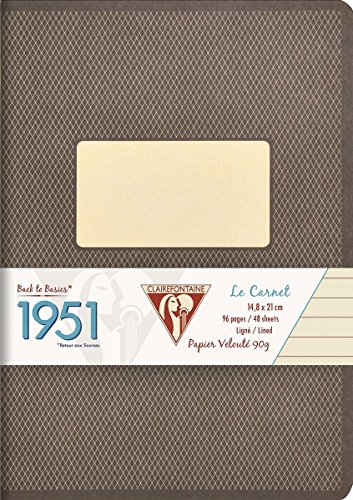 Clairefontaine 1951 A5, lined 90 g/m2 vellum in a stapled softcover, which is the cheapest place to find paper this good. | The best paper per dollar | $9.99 · View on Amazon #ad Price as of October 18, 2026. How this is funded |
1. The default first pen
Pilot Metropolitan
A brass-bodied pen with a nib far better than the price suggests, and the one most consistently handed to beginners.
#ad Price as of October 18, 2026. How this is funded
The brass body is the reason this pen feels like it costs more than it does. It gives the pen weight in the hand and a cold, solid grip section, which is the single thing most people notice moving up from a plastic school pen.
The nib is a Japanese Fine. That matters more than the letter suggests: Japanese grades run narrower than German ones, so a Pilot Fine lays a line closer to what a European maker would call extra fine. If you write small or on thin paper, that narrowness is doing you a favor.
The catch is filling. The Metropolitan takes Pilot's own cartridges, not the international standard ones every other brand shares, and the converter you need to use bottled ink is a separate purchase.
| Nib grades offered | Fine and Medium (stub also sold separately)Source: Pilot Metropolitan, Fine (retail listing, read 2026-09-01) |
|---|---|
| Nib width in mm | Not publishedPilot does not state a millimeter width for the Metropolitan nib in this listing. Japanese Fine runs narrower than a German Fine — see the nib size guide. |
| Body | Brass barrel, painted finishSource: Pilot Metropolitan, Fine (retail listing, read 2026-09-01) |
| Filling | Pilot proprietary cartridge, or a Pilot CON-40 / CON-70 converter (sold separately)Source: Pilot CON-40 converter (retail listing, read 2026-09-01) |
| In the box | Pen with one black ink cartridge and a squeeze converterSource: Pilot Metropolitan, Fine (retail listing, read 2026-09-01) |
What it does well
- Brass body at a plastic-pen price
- Japanese Fine nib puts down a narrow, controlled line
- Extremely widely stocked, so replacements and spares are easy
What it does not
- Proprietary Pilot cartridges, not the international standard
- Converter is sold separately
- The painted finish scuffs if you pocket-carry it with keys
Skip this if you want to use bottled ink on day one without a second purchase, or if you already know you prefer a broad, wet line.
2. The safest first bottle
Waterman Serenity Blue, 50 ml
The ink most often recommended as a first bottle because it is well behaved on ordinary paper and washes out of a pen easily.
A first bottle should be forgiving in two ways: it should behave on the cheap paper you already own, and it should rinse out without a fight when you want to change color. Serenity Blue is chosen for both.
It is a straightforward dye ink with no shimmer, no pigment and no unusual additives. That is exactly what you want while you are still learning which problems are the pen, which are the ink and which are the paper.
Waterman does not publish a drying time or a water-resistance figure for it, and neither does anyone else selling it, so we do not quote one.
| Format | 50 ml bottleSource: Waterman Serenity Blue (retail listing, read 2026-09-01) |
|---|---|
| Type | Dye-based, for refillable fountain pensSource: Waterman Serenity Blue (retail listing, read 2026-09-01) |
| Published drying time | Not published |
| Published water resistance | Not published |
What it does well
- Easy to flush out of a pen when changing colors
- Standard dye ink with no unusual additives to complicate diagnosis
- Widely stocked, so it is easy to replace
What it does not
- Not water resistant — a wet page is a lost page
- The color is deliberately unremarkable
- No published performance figures of any kind
Skip this if you need writing that survives water, or if you want the ink itself to be the interesting part of the setup.
3. The best paper per dollar
Clairefontaine 1951 A5, lined
90 g/m2 vellum in a stapled softcover, which is the cheapest place to find paper this good.
#ad Price as of October 18, 2026. How this is funded
This is the paper that makes the case on its own. 90 g/m2 coated vellum is the benchmark the rest of the market is measured against, and here it comes in a stapled book that costs less than a takeout lunch.
The softcover is the compromise. It will not survive being thrown in a bag for a year the way a hardcover will.
If you want to know whether your bleed-through problem is the ink or the paper, buy one of these and write the same page again. The answer is usually immediate.
| Paper weight | 90 g/m2 white velvet vellumSource: Clairefontaine 1951 A5 (retail listing, read 2026-09-01) |
|---|---|
| Maker's claim | Remarkable opacity and strengthThe maker's own wording on its listing.Source: Clairefontaine 1951 A5 (retail listing, read 2026-09-01) |
| Size and extent | 5 3/4" x 8 1/4", 96 pages, linedSource: Clairefontaine 1951 A5 (retail listing, read 2026-09-01) |
| Binding | Staplebound softcoverSource: Clairefontaine 1951 A5 (retail listing, read 2026-09-01) |
What it does well
- Published 90 g/m2 weight at a very low price
- The reference paper for fountain pen use
- Cheap enough to keep several
What it does not
- Softcover, so it wears in a bag
- 96 pages goes quickly
- Slow drying, like all coated paper
Skip this if you need a book that survives daily carry — buy the clothbound version instead.
What each part is actually doing
The nib decides how much ink reaches the page
A narrower nib lays down less ink per centimeter of line. Less ink means less for the paper to absorb, which means less feathering and less bleed-through. That is the whole reason we recommend a Fine rather than a Medium to start, and why a Japanese Fine — which runs narrower than a German Fine of the same letter — is the safest choice of all. The nib size guide explains why the letters do not match across brands.
The ink decides how it behaves when it lands
Inks differ in how wet they run, how fast they dry, whether they resist water and whether they will rinse out of a pen easily. A first bottle should be an ordinary dye ink with none of the interesting properties, because interesting properties are also diagnostic noise. Once you know what normal looks like, go and buy something that shades. Our ink for beginners page is ordered by behavior for exactly this reason.
The paper decides whether it stays where you put it
This is the part nobody sells you, and it is the part that decides whether the other two look good. Paper is described by weight in grams per square meter, but weight alone does not predict behavior — how the paper is sized and coated matters at least as much. A 52 gsm Tomoe River sheet resists bleeding better than a 70 gsm Moleskine page, which sounds impossible until you understand that one is hard-sized and the other is not. The GSM guide works through it.
The order to buy things in
- A pen, with a Fine nib. One pen. Not a set, not three cheap ones to compare. The variable you are testing at this stage is whether you enjoy writing with a nib at all, and one good pen answers that better than three mediocre ones.
- Paper you know is good. Buy this at the same time as the pen, not after the first disappointment. A Clairefontaine 1951 costs about the same as a sandwich and removes the single biggest source of confusion.
- Ink, third, and only if your pen takes a bottle. Most first pens ship with a cartridge. Use it. When it runs out you will know whether you want to keep going, and you will have a much better idea of what you want the ink to do.
- A converter, fourth, if your pen needs one. Pilot, LAMY and Platinum all sell a proprietary converter that turns their cartridge pens into bottle pens. Check which one fits your pen before ordering — this is where beginners waste the most money.
What to change if one of these is wrong for you
| If this is you | Change | Why |
|---|---|---|
| You are left-handed and smudge | Swap the paper for Black n' Red and the ink for a dry one | Coated paper dries slowly. Uncoated 90 gsm dries faster and a dry ink puts down less to dry. |
| You want to use bottled ink immediately | Swap the pen for a TWSBI ECO | It is a piston filler, so the bottle is the only refill and there is no converter to buy. |
| You write very small | Ask for an Extra Fine rather than a Fine | A narrower line keeps small loops from filling in, and puts down even less ink. |
| You are buying for a child | Swap the pen for a Pilot Kakuno | Hexagonal barrel, a face on the nib showing which way is up, and a nib width the maker actually publishes. |
| You only want to find out if you like it | Buy a Pilot Varsity six-pack instead | A real nib and a real feed for a few dollars, with no decisions attached. |
| You already own a Moleskine | Change the paper first, before anything else | At 70 gsm it is the wrong paper for a wet nib, and it will make a good pen look broken. |
What this setup will cost you, roughly
We do not print prices in body copy, because prices change and a number typed into a sentence is wrong within a month. Every price on this site comes from a live feed and is stamped with the date it was checked; where the feed has nothing fresh, the button says so rather than showing a stale figure. The buy buttons above are the honest answer to what this costs today.
What we can tell you is the shape of it: the pen is the largest single cost, the notebook is roughly a third of the pen, and the ink will outlast both. A bottle of ink filled into a pen once a week lasts most people well over a year.
What we are not telling you
We have not written with these pens. Nib & Notebook does not own a test bench, does not receive samples, and does not claim otherwise. What we do is compile what the makers publish, check the compatibility documentation, read where the established publishers agree and where they do not, and track the prices daily. Where a maker publishes nothing — and several publish nothing at all — the page says so instead of filling in a number. That is the whole method, and it is written out in full on how we choose.
Questions people actually ask
Do I need to buy a converter with my first pen?
Not immediately. Almost every first pen ships with a cartridge, which is enough writing to find out whether you enjoy the pen. Buy the converter when the cartridge runs out and you have decided to keep going — and check which converter fits before you order, because Pilot, LAMY and Platinum all use different ones.
What nib size should a beginner get?
Fine, in almost every case. A finer nib lays down less ink, which means it feathers less and bleeds through less on ordinary paper — the two problems that put beginners off. If you write very small, go one narrower to Extra Fine. The nib size guide covers why a Japanese Fine and a German Fine are not the same width.
Can I use a fountain pen in an ordinary notebook?
Sometimes, and the variable is the paper rather than the pen. A dry fine nib on 80 gsm office paper is usually fine. A wet medium on a 70 gsm Moleskine page will ghost badly and may bleed. If you must use the notebook you already own, use the narrowest nib and the driest ink you have — see inks that do not bleed.
Is a more expensive pen a better pen for a beginner?
No. Above roughly the price of a Metropolitan you are paying for materials, finish and filling mechanisms rather than for a nib that writes better. Several of the pens on this page write as well as pens costing five times as much, which is why the under-fifty roundup exists.
How long does a bottle of ink last?
Longer than most people expect. A 50 ml bottle holds enough to fill a typical converter well over fifty times, and a converter of ink is several days of ordinary writing. Treat the first bottle as a year's supply rather than a consumable.