Fountain Pens
The best fountain pens for calligraphy
Calligraphy pens vary their line three completely different ways - by nib shape, by plate width, or by pressure. Buying the wrong mechanism is the usual reason a calligraphy pen ends up in a drawer.
How this page is funded. Buying through a link here earns us a commission at no extra cost to you. It does not change what we recommend or the order we recommend it in, and we have not hands-on tested these products — see how we choose and the full disclosure.
Search for a calligraphy fountain pen and you will be shown three kinds of pen that work in completely different ways, described with the same word. That is the single reason this purchase goes wrong: people buy a flex pen expecting a stub, or a stub expecting a Parallel, and conclude the pen is faulty when it is simply a different instrument.
So this page sorts by mechanism first and by price second. Once you know which of the three you want, the choice inside each group is easy.
Three mechanisms, three different pens
| Mechanism | How the line changes | Technique needed | On this page |
|---|---|---|---|
| Stub / italic nib | Nib shape. Wide on down strokes, narrow on cross strokes, automatically | Almost none - it works as you write | LAMY Joy, LAMY Z50 stub, TWSBI ECO Stub |
| Parallel plate | Two flat plates. Full width sideways, hairline along the edge | Some - you steer the angle deliberately | Pilot Parallel |
| Flex nib | Pressure. Tines spread as you press harder | Real practice, and a light hand to start | Noodler's Ahab |
| Fude (bent) nib | The angle you hold the pen at | A little, and it is forgiving | Sailor Fude De Mannen |
The important row is the first one. A stub gives you line variation without learning anything, which is what most people searching for a calligraphy pen actually want - they want their ordinary handwriting to look better, not to learn Copperplate.
How we ranked these
- A published line width first. Four of these six state one in millimeters, which in this category is unusually good disclosure - the nib size guide covers why letters are useless here.
- Then how little technique the pen demands. A pen that only looks good after a month of practice is the wrong recommendation for someone buying their first one.
- Then cost of finding out. The cheapest honest entry matters more in this category than in any other, because a lot of people try calligraphy once.
- Then ink supply, since wide nibs empty a cartridge fast.
- No hands-on testing. Nothing here is based on our own writing, as everywhere on this site.
The pens
Quick picks
Ranked for the beginner buying their first setup. Every pick names who it is wrong for.
| # | Product | Best for | Price |
|---|---|---|---|
| 1 |  Pilot Parallel Pen, 1.5 mm Two flat plates instead of a nib, in the narrowest of the four widths - the dedicated calligraphy tool, at the price of a cheap cartridge pen. | The cheapest real calligraphy pen | |
| 2 |  LAMY Joy, 1.1 mm A 1.1 mm stub in a long-barreled body designed to rest in the web of the hand - the LAMY nib system aimed at calligraphy practice. | A stub pen built for long practice sessions | $34.51 · View on Amazon #ad Price as of October 18, 2026. How this is funded |
| 3 |  LAMY Z50 nib, 1.1 mm stub The 1.1 mm stub as a bare nib unit - the cheapest way to get line variation if there is already a LAMY in your drawer. | Turning a Safari you own into a calligraphy pen | |
| 4 |  TWSBI ECO, Stub 1.1 The ECO's 1.1 mm stub - the only pen here that pairs a calligraphy nib with a large built-in ink reservoir. | A stub with a piston filler behind it | $38.99 · View on Amazon #ad Price as of October 18, 2026. How this is funded |
| 5 | 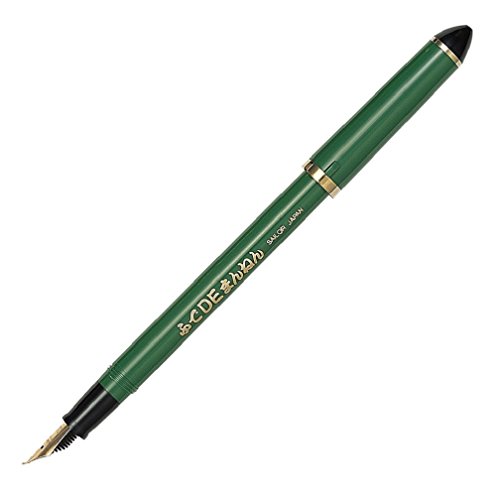 Sailor Fude De Mannen A nib bent upward at a stated angle, so tilting the pen changes the stroke from hairline to broad. Nothing else this cheap does it. | Line variation without learning calligraphy | $12.70 · View on Amazon #ad Price as of October 18, 2026. How this is funded |
| 6 |  Noodler's Ahab Flex A large piston-filling pen with a steel flex nib and a published 0.7 mm line, which is the broadest starting point in the cheap flex range. | The widest line variation for the money |
1. The cheapest real calligraphy pen
Pilot Parallel Pen, 1.5 mm
Two flat plates instead of a nib, in the narrowest of the four widths - the dedicated calligraphy tool, at the price of a cheap cartridge pen.
The Parallel is not a fountain pen with a wide nib. It is two flat metal plates with ink between them, and the line it draws is the width of those plates when you pull sideways and a hairline when you pull along their edge. That is a genuinely different instrument from a stub.
The 1.5 mm is the one to start with. The wider sizes are dramatic and hard to fill a page with; at 1.5 mm the pen still writes recognizable words, which is what most people actually want when they say calligraphy.
Two cartridges come in the box, which for once means the pen works out of the packet. Pilot sells refills in packs, and the two ink colors can be blended nib-to-nib - a trick the range is known for and one the listing does not describe, so treat it as folklore rather than specification.
| Nib width | 1.5 mmSource: Pilot Parallel Calligraphy Pen Set, 1.5 mm (retail listing, read 2026-09-26) |
|---|---|
| Type | Parallel calligraphy pen setSource: Pilot Parallel Calligraphy Pen Set, 1.5 mm (retail listing, read 2026-09-26) |
| Included | Black and red ink cartridgesSource: Pilot Parallel Calligraphy Pen Set, 1.5 mm (retail listing, read 2026-09-26) |
| Also offered | 2.4 mm, 3.0 mm, 3.8 mm and 6.0 mm in the same rangeSource: Pilot Parallel Calligraphy Pen Set, 2.4 mm (retail listing, read 2026-09-26) |
| Weight | Not published |
| Converter compatibility | Not published |
What it does well
- The cheapest way into real calligraphy line variation
- Published nib width, which most pens do not state
- Ink cartridges included, so it writes immediately
What it does not
- A plate nib is not a general writing nib - this is a single-purpose pen
- The listing publishes nothing beyond width and contents
- Wide plates dry out faster than a conventional capped nib
Skip this if you want one pen for both notes and flourishes. A Parallel does calligraphy and nothing else, and a stub nib is the compromise that writes normally too.
2. A stub pen built for long practice sessions
LAMY Joy, 1.1 mm
A 1.1 mm stub in a long-barreled body designed to rest in the web of the hand - the LAMY nib system aimed at calligraphy practice.
#ad Price as of October 18, 2026. How this is funded
The Joy is a Safari with a long tail and a stub nib. That matters more than it sounds: the extended barrel shifts the balance back into the hand, which is what stops a wrist cramping through a page of practice strokes.
The grip section is the same molded triangle as the Safari, which permits one hand position. For calligraphy that constraint is arguably a feature - a consistent hold produces a consistent angle - but it is still the reason some people cannot use any LAMY.
Because it uses the standard LAMY nib unit, this pen and every Safari, AL-star and Vista in the range share nibs. Buying the Joy and buying a stub nib for a pen you own are two routes to the same line.
| Line width | 1.1 mmSource: LAMY Joy, 1.1 mm (retail listing, read 2026-09-26) |
|---|---|
| Nib | Polished steel, described by the maker as a ribbon nibSource: LAMY Joy, 1.1 mm (retail listing, read 2026-09-26) |
| Grip | Ergonomic grip sectionSource: LAMY Joy, 1.1 mm (retail listing, read 2026-09-26) |
| Included | One LAMY T10 blue cartridgeSource: LAMY Joy, 1.1 mm (retail listing, read 2026-09-26) |
| Also offered | 1.5 mm and 1.9 mm line widthsSource: LAMY joy calligraphy set, 1.1 / 1.5 / 1.9 mm nibs (retail listing, read 2026-09-26) |
| Length | Not published |
What it does well
- Published 1.1 mm line width
- Long barrel designed for extended practice
- Shares nib units with every other LAMY in this range
What it does not
- The molded triangular grip does not suit every hand
- Costs more than three Pilot Parallels
- Only one cartridge included, and LAMY's cartridge is proprietary
Skip this if you already own a Safari or AL-star. The Z50 stub nib below turns the pen you have into the same 1.1 mm line for half the money.
3. Turning a Safari you own into a calligraphy pen
LAMY Z50 nib, 1.1 mm stub
The 1.1 mm stub as a bare nib unit - the cheapest way to get line variation if there is already a LAMY in your drawer.
The Z50 is the same nib unit the whole LAMY beginner range uses, so a stub bought for the joy drops into a Safari, an AL-star or a Vista. It pulls off and pushes on by hand in a few seconds.
That makes this the cheapest honest entry to calligraphy on this page for anyone who already owns a LAMY: no new pen, no new converter, just a wider nib on a body you have already decided you like.
The listing names the joy and does not publish a full fitment list, so we are describing the range this nib unit is known to serve rather than quoting one - the Safari review covers the shared nib system.
| Line width | 1.1 mmSource: LAMY Z50 nib set for joy, 1.1 (retail listing, read 2026-09-26) |
|---|---|
| Type | Z50 nib set, listed for the LAMY joySource: LAMY Z50 nib set for joy, 1.1 (retail listing, read 2026-09-26) |
| Nib material | Not published |
| Fitment list | Not published |
What it does well
- Published 1.1 mm width at a fraction of a new pen
- Swaps by hand, no tools
- Fits the LAMY pens this site already recommends
What it does not
- Useless unless you own a LAMY
- The listing publishes no fitment list of its own
- A bare nib unit is easy to misplace
Skip this if you do not already own a LAMY. Buying a Safari plus this nib costs more than the Joy, which is the same thing in a body built for it.
4. A stub with a piston filler behind it
TWSBI ECO, Stub 1.1
The ECO's 1.1 mm stub - the only pen here that pairs a calligraphy nib with a large built-in ink reservoir.
#ad Price as of October 18, 2026. How this is funded
Broad nibs drink ink, and a stub is a broad nib by area. That is the practical argument for putting one in a piston filler: the ECO's barrel holds far more than a cartridge, so a page of practice strokes does not end in a refill.
It is the same pen this site covers at Extra Fine, with the same clear barrel and the same caveats - see the ECO review for the full picture.
It is also the most expensive pen on this page, and a stub is the one nib grade people most often buy and then rarely use. Be honest with yourself about how much calligraphy you will actually do before choosing this over a Parallel.
| Nib | Stub 1.1Source: TWSBI ECO, White, Stub 1.1 (retail listing, read 2026-09-26) |
|---|---|
| Filling | Built-in piston - unscrew the end cap, dip the nib, screw it backSource: TWSBI, ECO product page (read 2026-09-01) |
| Nib grades offered | Extra Fine, Fine, Medium, Broad, Stub 1.1Source: TWSBI, ECO product page (read 2026-09-01) |
| Ink included | No - the pen ships emptySource: TWSBI, ECO product page (read 2026-09-01) |
| Nib width in mm beyond the stub grade | Not published |
What it does well
- A large visible ink supply behind a thirsty nib
- Bottled ink from the first fill, so color choice is unrestricted
- The same well-documented pen as the rest of the ECO range
What it does not
- The most expensive option here
- No ink included, so a bottle is a required extra purchase
- A stub in a piston filler is a lot of commitment to an occasional use
Skip this if you are testing whether you like calligraphy at all. A Pilot Parallel answers that question for a third of the money.
5. Line variation without learning calligraphy
Sailor Fude De Mannen
A nib bent upward at a stated angle, so tilting the pen changes the stroke from hairline to broad. Nothing else this cheap does it.
#ad Price as of October 18, 2026. How this is funded
A fude nib is bent upward near the tip, which means the width of your line depends on how steeply you hold the pen. Held almost flat it lays a broad stroke; tipped up onto the very end of the bend it writes a hairline. One pen, an enormous range.
Sailor publishes the bend angle rather than a width, which is the honest way to describe a nib whose width is a function of how you hold it. The 55-degree version has the more dramatic range; the 40-degree is closer to an ordinary pen with extra headroom.
It is not a first pen, and we are not ranking it as one. It is the pen to buy second, when the question has changed from whether you like fountain pens to what else they can do.
| Nib angle | 55 degreesSailor names the pen by the angle. A 40-degree version is sold as a separate product.Source: Sailor Fude De Mannen, 55 degrees (retail listing, read 2026-09-01) |
|---|---|
| Also offered | 40-degree nib angle, a shallower bendSource: Sailor Fude De Mannen, 40 degrees (retail listing, read 2026-09-01) |
| Filling | Sailor cartridge; Sailor sells its own converter separatelySource: Sailor fountain pen converter (retail listing, read 2026-09-01) |
| Line width in mm | Not published |
What it does well
- Genuine line variation from ordinary handwriting
- The maker publishes the nib angle, which is the meaningful figure here
- Cheap enough to be an experiment rather than a commitment
What it does not
- Not a general-purpose writing nib
- Wide strokes put down a lot of ink, so thin paper suffers
- Sailor's own cartridge, and a converter sold separately
Skip this as a first pen. A bent nib rewards a hand that already knows what a normal one feels like, and on cheap paper the broad strokes will bleed.
6. The widest line variation for the money
Noodler's Ahab Flex
A large piston-filling pen with a steel flex nib and a published 0.7 mm line, which is the broadest starting point in the cheap flex range.
A flex nib has tines that spread apart when you press, so a downstroke goes broad and an upstroke stays thin. That is the line variation people associate with old copperplate handwriting, and until recently it meant a vintage pen or a very expensive modern one.
The Ahab is the largest of the three cheap Noodler's flex pens and starts from the widest unflexed line at a published 0.7 mm. If you want the most dramatic contrast between thin and thick, this is the one to start from.
It is a piston filler with no cartridge option, so it needs a bottle of ink before it will write at all.
| Nib | Steel flex nibSource: Noodler's Ahab Flex (retail listing, read 2026-09-01) |
|---|---|
| Line size | 0.7 mmStated in the listing's own product attributes. This is the unflexed line — the point of a flex nib is that pressure widens it.Source: Noodler's Ahab Flex (retail listing, read 2026-09-01) |
| Filling | Piston fillSource: Noodler's Ahab Flex (retail listing, read 2026-09-01) |
| Published maximum flexed width | Not published |
What it does well
- The listing publishes an unflexed line width, which is rare at any price
- Large ink capacity from the piston barrel
- The broadest starting line of the affordable flex pens
What it does not
- No cartridge option — a bottle is compulsory
- Nobody publishes how wide the nib goes when flexed
- A 0.7 mm starting line is already wide for everyday notes
Skip this if you want one pen for ordinary writing. A 0.7 mm line before you even press is wider than most people want for a page of notes.
Stub or Parallel? The decision most people get wrong
These two are not competitors so much as different answers to different questions.
A stub is a normal fountain pen with a flattened nib. You can take notes with it, sign things with it and write a shopping list with it, and every one of those will have some thick-thin variation. It is a writing pen that happens to look calligraphic.
A Parallel is not a writing pen. The plates are far too wide for ordinary handwriting at any size you would use daily, and the pen exists to draw deliberate letterforms. It is the better calligraphy tool and the worse pen.
Where flex fits, and why it is not the beginner answer
Flex is the mechanism people picture when they imagine calligraphy - the dramatic swelling line of pointed-pen scripts. It is also the hardest of the three to use and the easiest to damage a nib with.
A flex nib varies its line by spreading the tines under pressure, which means the line depends entirely on your hand. Early attempts produce railroading, where the tines separate faster than ink can follow and the stroke splits into two rails. That is a technique problem, not a defect, and it takes practice to stop.
The Ahab is on this page as the flex representative because it is the widest line variation available at this price. If flex is specifically what you want, the flex nib roundup covers that market properly, including how small it is.
Paper matters more here than anywhere else
A calligraphy nib puts down several times the ink of a fine nib, on purpose. Everything this site says about paper applies here with the volume turned up.
- Thin paper will bleed, not ghost. A 1.9 mm stub on 70 gsm office stock soaks through to the next page and often the one after.
- Feathering shows up immediately, because there is more liquid to wick sideways into the fibers.
- Drying takes longer, so the side of your hand will smear a line that a fine nib would have dried already.
- Coated paper is the answer, not just heavy paper - Clairefontaine or Rhodia at 90 gsm, which hold ink at the surface.
If you are buying a calligraphy pen and writing on whatever is in the printer, budget for paper in the same order. The notebook roundup and the GSM guide both matter more once the nib gets wide.
Ink for a wide nib
Two consequences, both practical.
First, you will go through it. A wide nib empties a cartridge in a fraction of the pages a fine nib would, which is the argument for the piston-filled ECO on this page and for buying a bottle rather than cartridges generally.
Second, wide nibs are where ink character finally shows. Shading needs a pool of ink to happen in, and a stub lays one down on every down stroke - so an ink that looks flat in an extra fine can look genuinely different here. The blue and green roundups both flag which of their picks shade.
Avoid pigment and shimmer inks in a pen you do not clean often. That advice is doubled for a wide nib, which holds more of the stuff in its feed.
What this page is not
It is worth being straight about the ceiling here. Serious calligraphy - Copperplate, Spencerian, broad-edge historical hands - is done with dip pens, because a dip nib can be swapped, sharpened and flexed far beyond what any fountain pen tolerates.
A fountain pen buys convenience: no inkwell, no dipping, no mess, and a pen you can carry. That is a real trade and for most people it is the right one, but if your goal is a specific historical hand, the honest answer is that this category will not get you all the way there.
Questions people actually ask
What is the best fountain pen for calligraphy?
For a first one, the Pilot Parallel 1.5 mm - it is the cheapest, it is purpose-built, and it answers whether you enjoy calligraphy before you spend more. If you want a pen that also writes normally, a 1.1 mm stub such as the LAMY Joy is the better buy.
What is the difference between a stub nib and a calligraphy pen?
A stub is a flattened nib on an ordinary fountain pen: it gives thick-thin variation automatically and still writes normally. A Pilot Parallel uses two flat plates and is a dedicated calligraphy tool that is not comfortable for everyday handwriting.
Do I need a flex nib for calligraphy?
No, and it is usually the wrong place to start. Flex varies the line by pressure and takes real practice - early attempts railroad, where the tines outrun the ink. A stub gives line variation with no technique at all.
What nib width should I start with?
Around 1.1 mm for a stub, or 1.5 mm for a Parallel. Wider nibs look more dramatic and are much harder to fit onto a normal page, and they empty a cartridge quickly.
What paper should I use for calligraphy with a fountain pen?
Coated 90 gsm paper such as Clairefontaine or Rhodia. A calligraphy nib lays down several times the ink of a fine nib, so thin office paper will bleed through rather than merely ghost.
Can you do real calligraphy with a fountain pen?
Up to a point. A fountain pen gives you convenience and portability, and a stub or Parallel produces genuine line variation. Serious historical hands are still done with dip pens, because dip nibs flex further and can be swapped and sharpened.