Guides
Is a stub nib worth it?
Yes, at 1.0 or 1.1 mm, and only if you already like writing by hand - a stub makes everyday handwriting look deliberate without turning your pen into a calligraphy tool. Wider than 1.1 and it stops being a writing nib.
How this page is funded. Buying through a link here earns us a commission at no extra cost to you. It does not change what we recommend or the order we recommend it in, and we have not hands-on tested these products — see how we choose and the full disclosure.
A stub is worth buying if you write by hand often enough to notice what your handwriting looks like, and the width to buy is 1.0 or 1.1 mm. At that width the cheapest sensible route is the Pilot Metropolitan with its 1.0 mm stub - the same brass pen the site recommends as a first pen, with a nib that adds thick-and-thin variation to ordinary words. Anything wider than 1.1 mm is a lettering nib and will not write a notebook page comfortably.
It is worth being clear what a stub is not. It is not a wider Medium, it is not a flex nib, and it is not a calligraphy pen. It is a nib whose tip is a rectangle rather than a ball: wide when you pull it down the page, narrow when you pull it across. Your handwriting does the rest without any change in technique.
Stub, italic, broad: three words people use interchangeably
These are genuinely different grinds, and the distinction decides whether a nib is pleasant to write with or a chore.
| Grind | Tip shape | What the line does | Everyday writing? |
|---|---|---|---|
| Broad | A large round ball | Thick in every direction, no variation | Yes, but it is just a fat line |
| Stub | A rectangle with rounded corners | Wide on downstrokes, narrow across, soft transitions | Yes - this is the point of it |
| Italic | A rectangle with sharp corners | Sharper contrast than a stub, crisper line ends | Harder - it catches on the page if your angle drifts |
| Parallel plate | Two flat plates, no tipping at all | Maximum contrast, hairline on the narrow edge | No - a dedicated lettering tool |
The practical difference between a stub and an italic is forgiveness. A stub's rounded corners let the nib slide even when your hand rolls a few degrees off true, which hands do constantly. An italic's sharp corners reward a consistent angle and punish an inconsistent one by digging in. For handwriting rather than lettering, a stub is the right answer, and that is why almost every pen below is sold as a stub rather than an italic.
A broad nib is the thing people often buy when they wanted a stub. It is wider but it has no variation, so the writing is heavier without being more interesting - and it drinks ink at the same rate as a stub for less visible return. If you are choosing between them, the nib size guide sets out the whole grade ladder.
How we judged these
- A published width in millimeters. Every pick below states its width, which is unusual: most makers publish a letter and nothing else. A stub is a width-dependent purchase, so an unstated width is disqualifying.
- 1.0 to 1.1 mm first. This is the band that still writes words. Wider nibs are listed where they exist, and ranked below, because the honest finding is that most people use them twice.
- Does it get carried? A nib you only use at a desk on a Sunday is not an upgrade to your handwriting, it is an ornament. Pens that look ordinary rank above pens that look like calligraphy pens.
- Total cost to get a stub line. For anyone who already owns a LAMY, a bare nib unit beats a whole new pen, and that route is ranked on its own terms.
The pens
Quick picks
Ranked for the beginner buying their first setup. Every pick names who it is wrong for.
| # | Product | Best for | Price |
|---|---|---|---|
| 1 |  Pilot Metropolitan, 1.0 mm stub The site's default first pen with a 1.0 mm stub in place of the fine nib - line variation in a pen nobody will look at twice. | A stub you can take to work | $28.99 · View on Amazon #ad Price as of October 18, 2026. How this is funded |
| 2 |  TWSBI ECO, Stub 1.1 The ECO's 1.1 mm stub - the only pen here that pairs a calligraphy nib with a large built-in ink reservoir. | A stub with a piston filler behind it | $38.99 · View on Amazon #ad Price as of October 18, 2026. How this is funded |
| 3 |  LAMY Z50 nib, 1.1 mm stub The 1.1 mm stub as a bare nib unit - the cheapest way to get line variation if there is already a LAMY in your drawer. | Turning a Safari you own into a calligraphy pen | |
| 4 |  LAMY Joy, 1.1 mm A 1.1 mm stub in a long-barreled body designed to rest in the web of the hand - the LAMY nib system aimed at calligraphy practice. | A stub pen built for long practice sessions | $34.51 · View on Amazon #ad Price as of October 18, 2026. How this is funded |
| 5 | 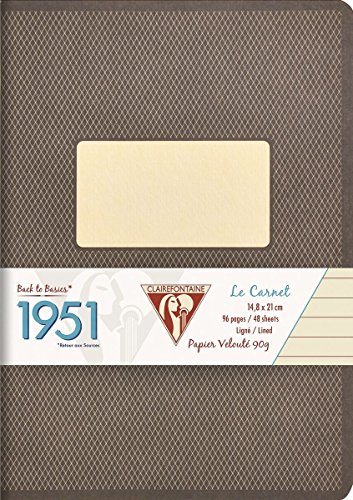 Clairefontaine 1951 A5, lined 90 g/m2 vellum in a stapled softcover, which is the cheapest place to find paper this good. | The best paper per dollar | $9.99 · View on Amazon #ad Price as of October 18, 2026. How this is funded |
1. A stub you can take to work
Pilot Metropolitan, 1.0 mm stub
The site's default first pen with a 1.0 mm stub in place of the fine nib - line variation in a pen nobody will look at twice.
#ad Price as of October 18, 2026. How this is funded
This is the one stub on this page that does not announce itself. It is the same brass Metropolitan covered in the Metropolitan review - same body, same filling system, same understated finish - with a 1.0 mm stub where the fine nib normally sits.
That matters because a stub's problem is rarely the nib. It is that calligraphy-shaped pens look like calligraphy pens, so they live in a drawer and get used on birthdays. A pen you would take into a meeting is a pen that gets used on a Tuesday.
At 1.0 mm it is also the narrowest stub here, which is the right end of the range for handwriting. A 1.1 is barely wider; a 1.5 and up is a lettering nib and will not write a notebook page of ordinary words comfortably.
One caution on the listing: Pilot states the gift box but does not publish what else is in it, and the standard Metropolitan ships with a cartridge and a squeeze converter. Do not assume the stub version matches until you have the box open.
| Nib | 1.0 mm stub, stainless steelSource: Pilot Metropolitan Fountain Pen, Black, 1.0 mm Stub nib (retail listing, read 2026-10-17) |
|---|---|
| Model | 91114Source: Pilot Metropolitan Fountain Pen, Black, 1.0 mm Stub nib (retail listing, read 2026-10-17) |
| Body | Balanced brass barrel with a stainless steel clipSource: Pilot Metropolitan Fountain Pen, Black, 1.0 mm Stub nib (retail listing, read 2026-10-17) |
| Packaging | Supplied in a Pilot gift boxSource: Pilot Metropolitan Fountain Pen, Black, 1.0 mm Stub nib (retail listing, read 2026-10-17) |
| What is in the box besides the pen | Not published |
| Weight | Not published |
What it does well
- Published 1.0 mm width, the narrowest stub here
- Looks like an ordinary pen, so it gets carried
- The same brass body and filling system as the standard Metropolitan
What it does not
- Costs more than the fine-nibbed Metropolitan
- The listing does not publish the box contents
- Pilot's proprietary cartridge, so cheap international packs do not fit
Skip this if you want one pen for both lettering and notes at the widest setting. This is a handwriting stub, and a [Parallel](/fountain-pens/pilot-parallel-pen-review) is the pen for a decorative line.
2. A stub with a piston filler behind it
TWSBI ECO, Stub 1.1
The ECO's 1.1 mm stub - the only pen here that pairs a calligraphy nib with a large built-in ink reservoir.
#ad Price as of October 18, 2026. How this is funded
Broad nibs drink ink, and a stub is a broad nib by area. That is the practical argument for putting one in a piston filler: the ECO's barrel holds far more than a cartridge, so a page of practice strokes does not end in a refill.
It is the same pen this site covers at Extra Fine, with the same clear barrel and the same caveats - see the ECO review for the full picture.
It is also the most expensive pen on this page, and a stub is the one nib grade people most often buy and then rarely use. Be honest with yourself about how much calligraphy you will actually do before choosing this over a Parallel.
| Nib | Stub 1.1Source: TWSBI ECO, White, Stub 1.1 (retail listing, read 2026-09-26) |
|---|---|
| Filling | Built-in piston - unscrew the end cap, dip the nib, screw it backSource: TWSBI, ECO product page (read 2026-09-01) |
| Nib grades offered | Extra Fine, Fine, Medium, Broad, Stub 1.1Source: TWSBI, ECO product page (read 2026-09-01) |
| Ink included | No - the pen ships emptySource: TWSBI, ECO product page (read 2026-09-01) |
| Nib width in mm beyond the stub grade | Not published |
What it does well
- A large visible ink supply behind a thirsty nib
- Bottled ink from the first fill, so color choice is unrestricted
- The same well-documented pen as the rest of the ECO range
What it does not
- The most expensive option here
- No ink included, so a bottle is a required extra purchase
- A stub in a piston filler is a lot of commitment to an occasional use
Skip this if you are testing whether you like calligraphy at all. A Pilot Parallel answers that question for a third of the money.
3. Turning a Safari you own into a calligraphy pen
LAMY Z50 nib, 1.1 mm stub
The 1.1 mm stub as a bare nib unit - the cheapest way to get line variation if there is already a LAMY in your drawer.
The Z50 is the same nib unit the whole LAMY beginner range uses, so a stub bought for the joy drops into a Safari, an AL-star or a Vista. It pulls off and pushes on by hand in a few seconds.
That makes this the cheapest honest entry to calligraphy on this page for anyone who already owns a LAMY: no new pen, no new converter, just a wider nib on a body you have already decided you like.
The listing names the joy and does not publish a full fitment list, so we are describing the range this nib unit is known to serve rather than quoting one - the Safari review covers the shared nib system.
| Line width | 1.1 mmSource: LAMY Z50 nib set for joy, 1.1 (retail listing, read 2026-09-26) |
|---|---|
| Type | Z50 nib set, listed for the LAMY joySource: LAMY Z50 nib set for joy, 1.1 (retail listing, read 2026-09-26) |
| Nib material | Not published |
| Fitment list | Not published |
What it does well
- Published 1.1 mm width at a fraction of a new pen
- Swaps by hand, no tools
- Fits the LAMY pens this site already recommends
What it does not
- Useless unless you own a LAMY
- The listing publishes no fitment list of its own
- A bare nib unit is easy to misplace
Skip this if you do not already own a LAMY. Buying a Safari plus this nib costs more than the Joy, which is the same thing in a body built for it.
4. A stub pen built for long practice sessions
LAMY Joy, 1.1 mm
A 1.1 mm stub in a long-barreled body designed to rest in the web of the hand - the LAMY nib system aimed at calligraphy practice.
#ad Price as of October 18, 2026. How this is funded
The Joy is a Safari with a long tail and a stub nib. That matters more than it sounds: the extended barrel shifts the balance back into the hand, which is what stops a wrist cramping through a page of practice strokes.
The grip section is the same molded triangle as the Safari, which permits one hand position. For calligraphy that constraint is arguably a feature - a consistent hold produces a consistent angle - but it is still the reason some people cannot use any LAMY.
Because it uses the standard LAMY nib unit, this pen and every Safari, AL-star and Vista in the range share nibs. Buying the Joy and buying a stub nib for a pen you own are two routes to the same line.
| Line width | 1.1 mmSource: LAMY Joy, 1.1 mm (retail listing, read 2026-09-26) |
|---|---|
| Nib | Polished steel, described by the maker as a ribbon nibSource: LAMY Joy, 1.1 mm (retail listing, read 2026-09-26) |
| Grip | Ergonomic grip sectionSource: LAMY Joy, 1.1 mm (retail listing, read 2026-09-26) |
| Included | One LAMY T10 blue cartridgeSource: LAMY Joy, 1.1 mm (retail listing, read 2026-09-26) |
| Also offered | 1.5 mm and 1.9 mm line widthsSource: LAMY joy calligraphy set, 1.1 / 1.5 / 1.9 mm nibs (retail listing, read 2026-09-26) |
| Length | Not published |
What it does well
- Published 1.1 mm line width
- Long barrel designed for extended practice
- Shares nib units with every other LAMY in this range
What it does not
- The molded triangular grip does not suit every hand
- Costs more than three Pilot Parallels
- Only one cartridge included, and LAMY's cartridge is proprietary
Skip this if you already own a Safari or AL-star. The Z50 stub nib below turns the pen you have into the same 1.1 mm line for half the money.
5. The best paper per dollar
Clairefontaine 1951 A5, lined
90 g/m2 vellum in a stapled softcover, which is the cheapest place to find paper this good.
#ad Price as of October 18, 2026. How this is funded
This is the paper that makes the case on its own. 90 g/m2 coated vellum is the benchmark the rest of the market is measured against, and here it comes in a stapled book that costs less than a takeout lunch.
The softcover is the compromise. It will not survive being thrown in a bag for a year the way a hardcover will.
If you want to know whether your bleed-through problem is the ink or the paper, buy one of these and write the same page again. The answer is usually immediate.
| Paper weight | 90 g/m2 white velvet vellumSource: Clairefontaine 1951 A5 (retail listing, read 2026-09-01) |
|---|---|
| Maker's claim | Remarkable opacity and strengthThe maker's own wording on its listing.Source: Clairefontaine 1951 A5 (retail listing, read 2026-09-01) |
| Size and extent | 5 3/4" x 8 1/4", 96 pages, linedSource: Clairefontaine 1951 A5 (retail listing, read 2026-09-01) |
| Binding | Staplebound softcoverSource: Clairefontaine 1951 A5 (retail listing, read 2026-09-01) |
What it does well
- Published 90 g/m2 weight at a very low price
- The reference paper for fountain pen use
- Cheap enough to keep several
What it does not
- Softcover, so it wears in a bag
- 96 pages goes quickly
- Slow drying, like all coated paper
Skip this if you need a book that survives daily carry — buy the clothbound version instead.
The widths that exist, and where to stop
| Width | Where you can get it | What it is for |
|---|---|---|
| 1.0 mm | Pilot Metropolitan stub | Handwriting. The narrowest and the most usable. |
| 1.1 mm | TWSBI ECO Stub, LAMY Z50 nib, LAMY Joy | Handwriting, with slightly more contrast. |
| 1.5 mm | LAMY Joy, Pilot Parallel | Headings, envelopes, short lines of lettering. |
| 1.9 mm | LAMY Joy | Lettering only. |
| 2.4 mm and up | Pilot Parallel range | Decorative work. Not a writing nib in any sense. |
The gap between 1.1 mm and 1.5 mm is where a stub stops being a handwriting nib. At 1.5 the downstroke is wide enough that normal-size letters fill in and a line of text becomes a band of ink; you can write with it, but you will write larger and slower. Everything above that is for lettering, and the Pilot Parallel is the honest tool for that job rather than a very wide stub.
The paper tax, which is the real cost
A stub puts more ink on the page than a fine nib, in a wider line, and that has three consequences on paper that is not up to it: feathering, show-through, and a long wait before you can touch the page. On a cheap pad, a 1.1 mm stub turns crisp handwriting into fuzzy handwriting.
This is why a notebook is on the pick list rather than mentioned in passing. If you are buying a stub for a pen that currently lives on office paper, the honest total cost is the nib plus better paper - and the bleed, ghosting and feathering guide explains which of the three you are looking at.
Drying time is the part people underestimate. A wide wet line can stay wet for ten or fifteen seconds on well-sized paper, which is fine if you are writing a page and leaving it, and a problem if you close the notebook immediately.
Who should not buy a stub
- Left-handed writers who push the hand across the line. More ink and slower drying is exactly the wrong combination. The left-handers page argues for narrower nibs for this reason, and a stub is the opposite move.
- Anyone writing small. If your letters are a few millimeters tall, a 1.1 mm downstroke closes up the loops in 'e' and 'a' and the writing becomes less legible, not more attractive.
- Pocket-notebook users. A stub needs room. On pocket paper at pocket-notebook line spacing it is cramped.
- Anyone who owns exactly one pen and needs it to be reliable. A stub is a second nib, not a first one. Keep a fine or medium as the pen that works, and let the stub be the one you reach for.
If you already own a LAMY, read this first
LAMY's beginner range - Safari, AL-star, Vista and Joy - all share one nib unit, and it pulls off and pushes on by hand in a few seconds with no tools. A 1.1 mm stub nib therefore costs a fraction of a new pen and turns a pen you already like into a stub pen.
That is the cheapest honest route on this page for an existing LAMY owner, and it is why the bare nib unit is ranked above the Joy despite being a less complete object. If you do not own a LAMY, it is useless to you - which is exactly the kind of thing a ranking should say out loud.
What a stub will not do
It will not improve your handwriting. It makes the handwriting you already have more contrasted, which flatters a steady hand and exaggerates a shaky one. It will not produce calligraphy either: real lettering needs a held angle and practice strokes, and a stub in ordinary cursive gives you the look of line variation without any of the craft. That is a reasonable thing to want, and it is worth being honest that it is what you are buying.
Questions people actually ask
What is a stub nib?
A nib whose tip is a rectangle with rounded corners rather than a ball. It lays a wide line on downstrokes and a narrow line across, so ordinary handwriting comes out with thick-and-thin variation. The width quoted - 1.1 mm, for instance - is the wide dimension.
Is a stub nib worth it for everyday writing?
At 1.0 or 1.1 mm, yes, if you write by hand regularly and use paper that holds ink. Wider than 1.1 mm it stops being a writing nib: the downstrokes fill in normal-size letters and the line takes too long to dry.
What is the difference between a stub and an italic nib?
Corner shape. A stub has rounded corners and slides even when your hand angle drifts; an italic has sharp corners, which gives crisper line ends but catches on the page if the angle is not consistent. A stub is the forgiving one and the right choice for handwriting.
Is a stub the same as a broad nib?
No. A broad nib is a bigger ball, so the line is thick in every direction with no variation. A stub varies by direction. A broad uses roughly as much ink as a stub for none of the visual effect.
Do I need special paper for a stub nib?
You need paper that holds ink. A stub lays down more of it in a wider line, so feathering and show-through that were tolerable with a fine nib become obvious. Well-sized paper also means a longer wait before the page can be touched.
Can I put a stub nib on a pen I already own?
On a LAMY, yes - the Safari, AL-star, Vista and Joy all use the same Z50 nib unit, which swaps by hand in seconds. On most other pens a nib change means a nib unit the maker does not sell separately, so the practical answer is a different pen.
Are stub nibs good for left-handers?
Usually not. A stub puts more ink on the page and takes longer to dry, which is the exact combination that smudges under a hand that pushes across the line. A narrower nib and a faster-drying ink is the better route.
Sources
- Pilot Metropolitan Fountain Pen, Black, 1.0 mm Stub nib (retail listing, read 2026-10-17)
- TWSBI ECO, White, Stub 1.1 (retail listing, read 2026-10-17)
- LAMY Z50 nib set for joy, 1.1 (retail listing, read 2026-10-17)
- LAMY Joy, 1.1 mm (retail listing, read 2026-10-17)
- TWSBI, ECO product page (read 2026-09-01)