Ink
The best fountain pen inks for journaling
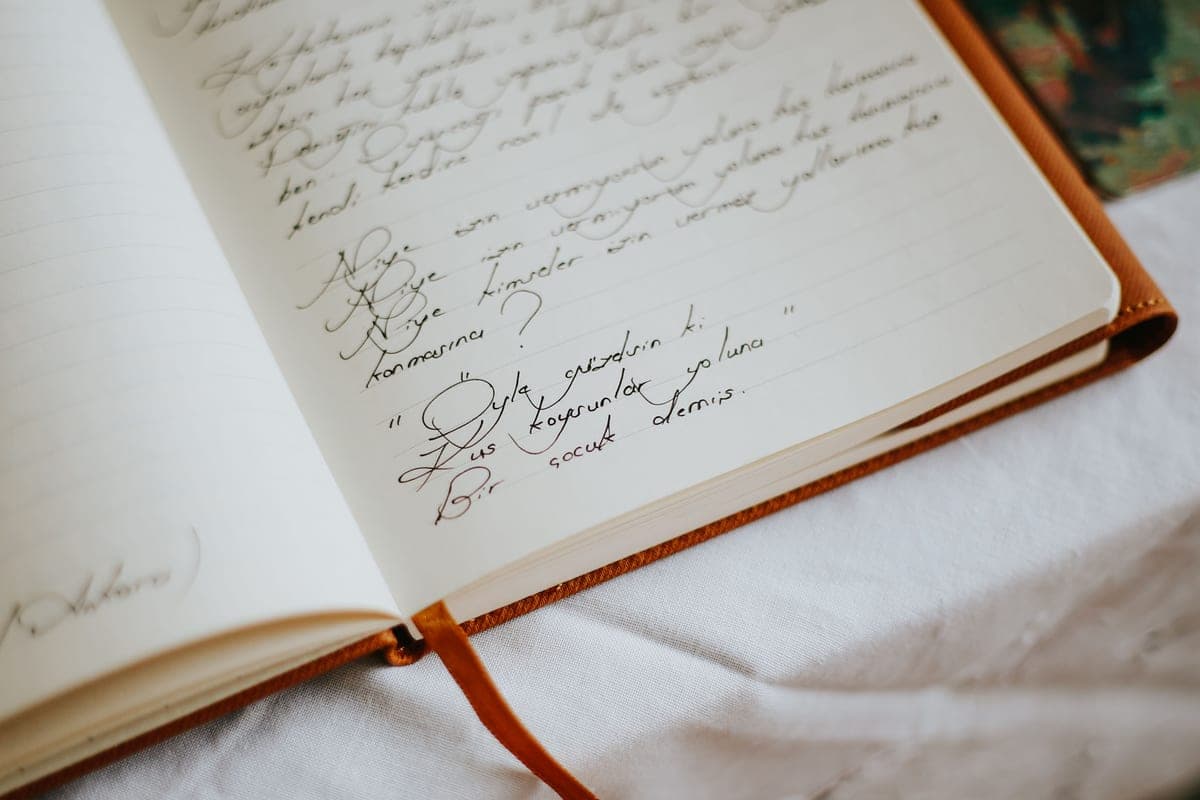
A journal is the one thing you write that you expect to read in twenty years. That changes which ink is the right one.
How this page is funded. Buying through a link here earns us a commission at no extra cost to you. It does not change what we recommend or the order we recommend it in, and we have not hands-on tested these products — see how we choose and the full disclosure.
Most ink decisions are reversible. If you dislike a color you flush the pen and try another one, and the pages you wrote in the meantime do not matter much. A journal is the exception: the ink you choose is the ink those pages will be in permanently, and you will be reading them long after you have forgotten which bottle it came from.
That pushes the decision toward two properties that barely matter elsewhere — permanence, and comfort over a full page.
Quick picks
Ranked for the beginner buying their first setup. Every pick names who it is wrong for.
| # | Product | Best for | Price |
|---|---|---|---|
| 1 |  Platinum Carbon Black, 60 ml A true pigment ink: the blackest line you can get out of a fountain pen, and permanent once dry. | Line work and archival notes | |
| 2 | 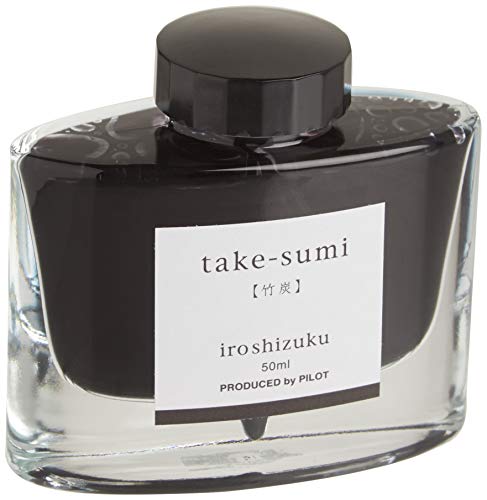 Pilot Iroshizuku Take-sumi, 50 ml A bamboo-charcoal black with enough warmth that a page of it does not read as printer output. | A black that is not flat | |
| 3 | 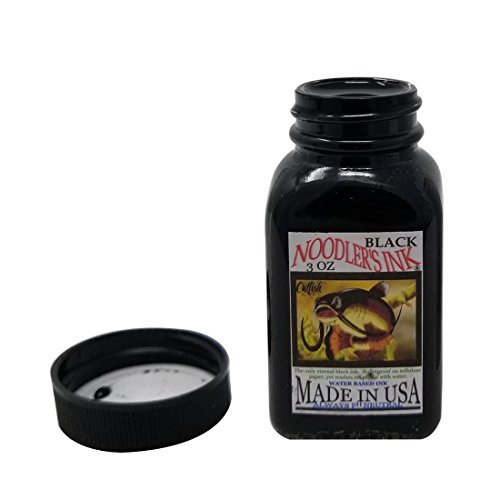 Noodler's Black, 3 oz A dye that bonds to paper fibers, so once it is dry the writing stays put even when the page does not. | Writing that has to survive water | $18.46 · View on Amazon #ad Price as of October 18, 2026. How this is funded |
| 4 |  Pelikan 4001 Royal Blue, 62.5 ml A dry-writing classic that lays down less ink than most, which is exactly what cheap paper needs. | Thin, absorbent paper |
1. Line work and archival notes
Platinum Carbon Black, 60 ml
A true pigment ink: the blackest line you can get out of a fountain pen, and permanent once dry.
Pigment ink suspends solid particles rather than dissolving a dye, which is why it is opaque, why it is permanent, and why it will clog a pen left to dry out.
For drawing, for signatures, and for anything you want legible in twenty years, nothing else in a fountain pen comes close.
It demands discipline. Do not leave it in a pen you are not using, and flush thoroughly when you change ink.
| Format | 60 ml bottleSource: Platinum Carbon Black (retail listing, read 2026-09-01) |
|---|---|
| Type | Pigment ink (carbon), not a dyeSource: Platinum Carbon Black (retail listing, read 2026-09-01) |
| Also sold as | Platinum Carbon cartridges, for pens that take themSource: Platinum Carbon ink cartridges (retail listing, read 2026-09-01) |
| Published drying time | Not published |
What it does well
- Genuinely black and genuinely permanent
- Excellent for ink drawing over watercolor
- Available as cartridges as well as a bottle
What it does not
- Will clog a pen that is left to dry
- Needs more frequent cleaning than any dye ink
- Not a good match for a pen you use once a fortnight
Skip this if your pen sits unused for weeks at a time — a dried pigment ink is a much bigger problem than a dried dye ink.
2. A black that is not flat
Pilot Iroshizuku Take-sumi, 50 ml
A bamboo-charcoal black with enough warmth that a page of it does not read as printer output.
Most fountain pen blacks are either weak or aggressively saturated. Take-sumi sits between: dark enough to look deliberate, soft enough that a full page is comfortable to read.
Like the rest of the Iroshizuku range it runs on the wet side, so the paper conversation applies.
If you want a black that survives water, this is not it — that is a job for a pigment ink.
| Format | 50 ml bottleSource: Pilot Iroshizuku Take-Sumi (retail listing, read 2026-09-01) |
|---|---|
| Color | Take-sumi, bamboo charcoal blackSource: Pilot Iroshizuku Take-Sumi (retail listing, read 2026-09-01) |
| Published drying time | Not published |
| Published water resistance | Not published |
What it does well
- A black with visible character rather than flat opacity
- Flows well in dry nibs
- Same well-behaved dye base as the rest of the range
What it does not
- Wet flow on thin paper
- Premium price
- No water resistance
Skip this if you need archival or waterproof writing — use a pigment ink and clean the pen more often.
3. Writing that has to survive water
Noodler's Black, 3 oz
A dye that bonds to paper fibers, so once it is dry the writing stays put even when the page does not.
#ad Price as of October 18, 2026. How this is funded
The reason to keep a bottle of this is not the color. It is that a signed document, an address on an envelope or a note left on a windowsill survives contact with water, which ordinary dye inks do not.
Because the dye bonds to the paper rather than sitting on it, it also tends to feather less on cheap stock than its wetness would suggest.
The trade-off is cleaning. Inks that bond to cellulose also bond to the inside of a pen, so flush more often and do not leave it sitting in a pen you plan to ignore for a month.
| Format | 3 oz bottleSource: Noodler's Black (retail listing, read 2026-09-01) |
|---|---|
| Type | Waterproof once dried; the maker describes the dye as bonding to celluloseSource: Noodler's Black (retail listing, read 2026-09-01) |
| Claimed behavior | Feathering-resistant and quick-dryingThe maker's own claim on the listing. We have not tested it.Source: Noodler's Black (retail listing, read 2026-09-01) |
| Published drying time in seconds | Not published |
What it does well
- Water resistance that ordinary dye inks cannot offer
- Large bottle
- Copes better than most wet inks on ordinary paper
What it does not
- Harder to flush out than a standard dye ink
- Not for a pen you will leave unused for long periods
- No published drying figure despite the quick-drying claim
Skip this if you swap colors often or leave pens inked for weeks — a bonding ink punishes both habits.
4. Thin, absorbent paper
Pelikan 4001 Royal Blue, 62.5 ml
A dry-writing classic that lays down less ink than most, which is exactly what cheap paper needs.
A dry ink is not a defect. Less ink leaving the nib per centimeter of line means less ink for absorbent paper to wick sideways, which is why a dry ink on bad paper often looks sharper than a wet ink on good paper.
4001 is the reference point for that behavior. If you are stuck writing on photocopier paper or a school notebook, this is the pairing that has the best chance of staying crisp.
The trade is on good paper, where a dry ink can feel scratchy and looks thin next to something more saturated.
| Format | 62.5 ml bottleSource: Pelikan 4001 Royal Blue (retail listing, read 2026-09-01) |
|---|---|
| Range | 4001, Pelikan's long-running everyday ink lineSource: Pelikan 4001 Royal Blue (retail listing, read 2026-09-01) |
| Published drying time | Not published |
| Published water resistance | Not published |
What it does well
- Runs dry, which suits thin and absorbent paper
- Large bottle for the money
- Long-established formula that is easy to replace anywhere
What it does not
- Can feel scratchy in an already-dry pen
- Color is pale next to modern saturated inks
- No published figures for drying or water resistance
Skip this if your pen already writes dry — pairing a dry ink with a dry nib is how people conclude they hate fountain pens.
Permanence, honestly assessed
A dye ink fades with light exposure and dissolves in water. For a notebook that lives closed on a shelf, fading is slow and largely theoretical. For anything that might meet a spilled drink, it is not.
Pigment inks such as Platinum Carbon Black are the genuinely archival option, and bonding inks such as Noodler's Black resist water once dry. Neither maker publishes a lightfastness rating, so we are not going to compare them numerically — what we can say is what each maker claims about its own product, which is in the specification tables above.
Readability over a full page
This is where a very saturated black stops being ideal. A page of dense, high-contrast ink is tiring to read at length, and a slightly softer black or a dark blue-black is more comfortable across a full spread.
It is also where shading becomes a liability rather than a feature. An ink that varies from pale to dark within a stroke looks wonderful on a single line and inconsistent across a page of longhand.
What not to journal with
- Shimmer inks. The particles settle, the pen needs shaking, and a decade later the shimmer is a texture on the page rather than an effect.
- Very wet, saturated inks on thin paper. A journal is written on both sides. Bleed-through costs you half your pages — see inks that do not bleed.
- Anything you cannot replace. Limited-edition inks run out. If you are two hundred pages into a journal, matching the color matters more than you expect.
Match the ink to the paper you are using
If your journal is a Leuchtturm1917 or another structured notebook on thinner paper, choose a dry ink and a fine nib. If it is a Rhodia or a Clairefontaine, you have the headroom for a wetter ink and a broader nib.
Buying the ink and the notebook together, rather than months apart, is the single easiest way to avoid a mismatch you then live with for a year.
Questions people actually ask
What ink should I use for journaling?
A permanent one, if the journal matters to you. Platinum Carbon Black is a pigment ink and genuinely archival; Noodler's Black bonds to the paper and resists water. Both need more frequent pen cleaning than a dye ink.
Does fountain pen ink fade over time?
Dye inks fade with light exposure, though slowly for a notebook that lives closed. Pigment inks are far more stable. No maker in this category publishes a lightfastness rating, so we do not rank them numerically.
Can I journal on both sides of the page?
It depends on the paper and the nib far more than the ink. On 90 gsm or better with a fine nib, yes comfortably. On 70 gsm with a medium, expect show-through — see paper GSM explained.
Is black or blue better for a journal?
Both work. A very saturated black is tiring to read across a full page, so a softer black or a blue-black is often more comfortable for long entries.