Ink
The best ink for a LAMY Safari
The Safari's nib runs broader than a Japanese pen of the same letter, which changes which inks behave in it. The cartridge question comes first, though.
How this page is funded. Buying through a link here earns us a commission at no extra cost to you. It does not change what we recommend or the order we recommend it in, and we have not hands-on tested these products — see how we choose and the full disclosure.
Two things about the LAMY Safari decide what ink belongs in it, and neither is obvious from the box.
The first is that it takes LAMY's own proprietary cartridge and nothing else - the international standard will not fit. The second is that LAMY nibs run broad by Japanese standards, so a LAMY Fine puts more ink on the page than the word suggests.
The cartridge question comes first
LAMY's T10 cartridge is proprietary. That is not unusual - Pilot and Platinum do the same - but it has a specific consequence for ink choice: without a converter, your entire ink range is whatever LAMY sells in a plastic tube.
The T10 is a perfectly good ink and there is no shame in staying on cartridges, especially if the pen travels. But the Z28 converter is the single cheapest upgrade available to a Safari owner, and it is the difference between a handful of LAMY colors and the entire bottled market. The cartridge versus converter guide covers the trade in full.
How we ranked these
- Fit first. A cartridge that does not fit the pen is not an option at any quality, so the LAMY-specific parts lead the list.
- Then dryness, because a LAMY nib is already generous. An ink that is well behaved in a Japanese Fine can be too much in a LAMY Medium.
- Then ease of flushing, since the Safari's nib unit pulls off by hand and gets cleaned more often than most.
- Then color, last, as everywhere on this site.
- No lab testing. No drying or water-resistance figures of our own appear here.
The inks
Quick picks
Ranked for the beginner buying their first setup. Every pick names who it is wrong for.
| # | Product | Best for | Price |
|---|---|---|---|
| 1 |  LAMY T10 cartridges, black The proprietary cartridge every LAMY fountain pen takes, and the only cartridge they take. | Refilling a Safari, AL-star or Vista | $4.50 · View on Amazon #ad Price as of October 18, 2026. How this is funded |
| 2 | 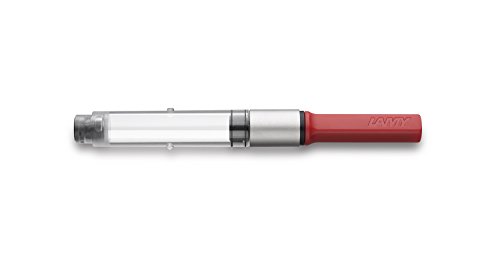 LAMY Z28 converter The piston converter that turns any modern LAMY cartridge pen into a bottled-ink pen. | Bottled ink in a Safari, AL-star or Vista | |
| 3 |  Waterman Serenity Blue, 50 ml The ink most often recommended as a first bottle because it is well behaved on ordinary paper and washes out of a pen easily. | The safest first bottle | |
| 4 |  Pelikan 4001 Brilliant Black, 30 ml A dry, thin, unremarkable black that behaves on paper other inks ruin - which is exactly what a first bottle should do. | The default black, and the cheapest way to be safe | $6.80 · View on Amazon #ad Price as of October 18, 2026. How this is funded |
| 5 | 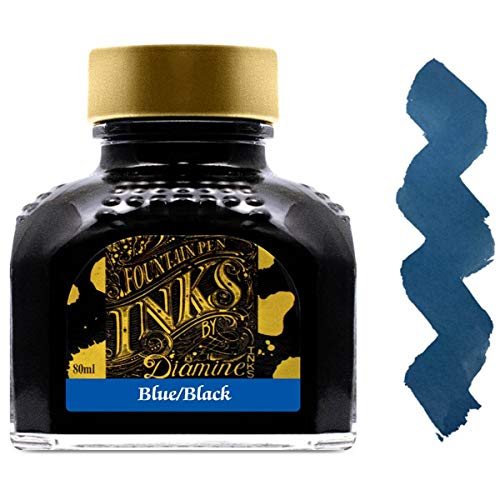 Diamine Blue-Black, 80 ml Eighty milliliters of an everyday blue-black - the big-bottle pick, as long as you do not read the name as a promise of permanence. | The largest bottle of blue-black here | $30.95 · View on Amazon #ad Price as of October 18, 2026. How this is funded |
| 6 |  Pilot Iroshizuku Kon-peki, 50 ml A deep azure blue that flows generously and shades from pale to dark within a single stroke on good paper. | The first bottle worth being excited about | $18.80 · View on Amazon #ad Price as of October 18, 2026. How this is funded |
1. Refilling a Safari, AL-star or Vista
LAMY T10 cartridges, black
The proprietary cartridge every LAMY fountain pen takes, and the only cartridge they take.
#ad Price as of October 18, 2026. How this is funded
The T10 is a proprietary size. An international standard cartridge will not fit a LAMY, and this is the single most common ordering mistake new Safari owners make.
At 1.25 ml each it holds more than a short international cartridge, which is a small consolation for the lock-in.
If you would rather use bottled ink, the LAMY Z28 converter fits the same barrel.
| Format | 5 cartridges per pack, 1.25 ml eachSource: LAMY T10 cartridges (retail listing, read 2026-09-01) |
|---|---|
| Fits | All LAMY fountain pen modelsSource: LAMY T10 cartridges (retail listing, read 2026-09-01) |
| Published drying time | Not published |
| Published water resistance | Not published |
What it does well
- Larger capacity than a short international cartridge
- Fits every LAMY fountain pen
- Nothing to measure or spill
What it does not
- Proprietary — no other brand's cartridges fit
- Costs more per milliliter than bottled ink
- Color choice is limited to LAMY's own range
Skip this if you own a Z28 converter and a bottle — cartridges cost several times as much per fill.
2. Bottled ink in a Safari, AL-star or Vista
LAMY Z28 converter
The piston converter that turns any modern LAMY cartridge pen into a bottled-ink pen.
Buying a Safari without a converter is the most common first-order mistake in this hobby. The pen ships with one cartridge and no way to use bottled ink.
The Z28 is a twist piston: put the nib in the bottle up to the section, twist, and it draws ink. There is no trick to it.
Check the number. The Z24 looks nearly identical and fits a different set of pens.
| Fits | LAMY ABC, AL-star, joy, Lx, nexx, nexx M, safari and vistaSource: LAMY Z28 converter (retail listing, read 2026-09-01) |
|---|---|
| Type | Piston converterSource: LAMY Z28 converter (retail listing, read 2026-09-01) |
| Capacity | Not published |
| Not to be confused with | The Z24, which fits older LAMY modelsSource: LAMY Z24 converter (retail listing, read 2026-09-01) |
What it does well
- Fits the whole current LAMY range
- Simple twist piston with nothing to break
- Turns a cartridge pen into a bottle pen for a few dollars
What it does not
- Holds less ink than a T10 cartridge in practice
- Easy to confuse with the Z24
- LAMY-only
Skip this if you only ever use cartridges — it is a part you will never fit.
3. The safest first bottle
Waterman Serenity Blue, 50 ml
The ink most often recommended as a first bottle because it is well behaved on ordinary paper and washes out of a pen easily.
A first bottle should be forgiving in two ways: it should behave on the cheap paper you already own, and it should rinse out without a fight when you want to change color. Serenity Blue is chosen for both.
It is a straightforward dye ink with no shimmer, no pigment and no unusual additives. That is exactly what you want while you are still learning which problems are the pen, which are the ink and which are the paper.
Waterman does not publish a drying time or a water-resistance figure for it, and neither does anyone else selling it, so we do not quote one.
| Format | 50 ml bottleSource: Waterman Serenity Blue (retail listing, read 2026-09-01) |
|---|---|
| Type | Dye-based, for refillable fountain pensSource: Waterman Serenity Blue (retail listing, read 2026-09-01) |
| Published drying time | Not published |
| Published water resistance | Not published |
What it does well
- Easy to flush out of a pen when changing colors
- Standard dye ink with no unusual additives to complicate diagnosis
- Widely stocked, so it is easy to replace
What it does not
- Not water resistant — a wet page is a lost page
- The color is deliberately unremarkable
- No published performance figures of any kind
Skip this if you need writing that survives water, or if you want the ink itself to be the interesting part of the setup.
4. The default black, and the cheapest way to be safe
Pelikan 4001 Brilliant Black, 30 ml
A dry, thin, unremarkable black that behaves on paper other inks ruin - which is exactly what a first bottle should do.
#ad Price as of October 18, 2026. How this is funded
Pelikan makes a point of the formula's age, and for once the marketing line is the useful specification: 4001 is a thin, low-saturation ink from an era before anyone was optimizing for photographs of ink swatches.
Thin and low-saturation is what you want on paper you have not tested. Less liquid reaches the page, so there is less to feather sideways and less to soak through.
It is not waterproof and Pelikan does not claim it is. A wet thumb will smear a fresh line. If that matters, the waterproof ink page covers the inks that survive it.
| Volume | 30 mlSource: Pelikan 4001 Brilliant Black, 30 ml (retail listing, read 2026-09-13) |
|---|---|
| Formula age | Developed over 125 years ago, per the makerSource: Pelikan 4001 Brilliant Black, 30 ml (retail listing, read 2026-09-13) |
| Made in | GermanySource: Pelikan 4001 Brilliant Black, 30 ml (retail listing, read 2026-09-13) |
| Compatibility | Pelikan pens and other brands with a piston or converter, per the makerSource: Pelikan 4001 Brilliant Black, 30 ml (retail listing, read 2026-09-13) |
| Water resistance | Not published |
| Drying time | Not published |
What it does well
- Behaves on cheap paper better than almost any saturated black
- The least expensive bottle of any ink we recommend
- Flushes out of a pen easily, so it is a safe first fill
What it does not
- Reads gray-black rather than a deep black
- No water resistance, and none claimed
- 30 ml is a small bottle by fountain pen standards
Skip this if you want a dense, photographic black. This is the safe one, not the dramatic one - Noodler's Black or Platinum Carbon Black are the dense ones.
5. The largest bottle of blue-black here
Diamine Blue-Black, 80 ml
Eighty milliliters of an everyday blue-black - the big-bottle pick, as long as you do not read the name as a promise of permanence.
#ad Price as of October 18, 2026. How this is funded
The listing states the volume and the color and nothing else, which is normal for Diamine. The useful number is the arithmetic: 80 ml is the largest bottle on this page, against 50 to 62.5 ml for the others.
Blue-black here is a color, not a chemistry. The listing makes no water-resistance claim, so treat it as an ordinary ink - fine in a notebook, not for anything that might get wet.
If you like Diamine's behavior but want a brighter blue, the same range covers dozens of them, and the Diamine profile is the place to browse.
| Volume | 80 ml bottleSource: Diamine Blue-Black, 80 ml (retail listing, read 2026-10-10) |
|---|---|
| Color | Blue/BlackSource: Diamine Blue-Black, 80 ml (retail listing, read 2026-10-10) |
| Water resistance | Not published |
| Drying time | Not published |
What it does well
- The largest bottle on this page
- Dark enough to read as a serious everyday color
- Part of a very large range if you want to change color later
What it does not
- The listing publishes nothing beyond volume and color
- 80 ml is a long commitment to one ink
- No water resistance claimed
Skip this if blue-black appeals because you assume it is permanent. Nothing on this listing says so; the Sailor pigment blue is the one on this page built for that job.
6. The first bottle worth being excited about
Pilot Iroshizuku Kon-peki, 50 ml
A deep azure blue that flows generously and shades from pale to dark within a single stroke on good paper.
#ad Price as of October 18, 2026. How this is funded
Iroshizuku is where most people discover that ink can be interesting. Kon-peki shades — the same stroke goes light where the ink pooled less and dark where it pooled more — and that variation is what makes handwriting look considered rather than printed.
It is a wet ink. On the 70 gsm paper in a supermarket notebook it will show through, and on the worst paper it will bleed. Pair it with 90 gsm or better and it behaves.
It costs several times what a bottle of everyday blue costs, and it will last you a year of daily writing regardless.
| Format | 50 ml bottleSource: Pilot Iroshizuku Kon-peki (retail listing, read 2026-09-01) |
|---|---|
| Color | Kon-peki, deep azure blueSource: Pilot Iroshizuku Kon-peki (retail listing, read 2026-09-01) |
| Behavior noted in the listing | Shading and sheen, most visible with broader nibsSource: Pilot Iroshizuku Kon-peki (retail listing, read 2026-09-01) |
| Published drying time | Not published |
What it does well
- Genuine shading that rewards good paper
- Flows generously in dry-writing nibs
- One bottle lasts a very long time
What it does not
- Wet flow means bleed-through on thin paper
- Several times the price of an everyday blue
- Not water resistant
Skip this if the paper you actually write on is thin office stock — a wet ink on absorbent paper wastes the ink and ruins the page.
Why a dry ink suits this pen
A LAMY Fine lays down a line closer to what a Japanese maker would call a Medium. Pair that wider, wetter line with a saturated ink and ordinary office paper, and you get the feathering and show-through that makes people blame the pen.
Going drier on the ink is the cheapest correction available - cheaper than changing paper and much cheaper than changing pens. Pelikan 4001 and Waterman's Serenity Blue are both on the dry side, which is exactly why they lead this page.
The other correction is the nib itself. The Safari's nib unit pulls off and pushes on by hand, so moving from a Medium to a Fine is a few dollars rather than a new pen - the argument the Safari versus AL-star comparison makes at more length.
If you are left-handed
The Safari is one of the few pens in this price range with a dedicated left-hander nib grade, which makes ink choice more consequential than usual.
Pair that nib with a fast-drying ink rather than a saturated one, and keep away from anything wet. The inks for left-handers page covers which bottles, and the pens page covers why drying time beats everything else.
What to avoid in a Safari
- Pigment inks, unless the pen is in daily use. The Safari is cheap enough that people leave it inked for months, and a pigment ink left standing is how a feed blocks.
- Shimmer inks. The particles that make them sparkle also settle in a feed, and the Safari's nib unit is not designed to be disassembled for cleaning.
- Anything very saturated, on office paper. The nib is wide enough that saturation becomes show-through.
- Third-party cartridges sold as LAMY-compatible, unless you have verified the fit - the compatibility guide covers which systems interchange.
Questions people actually ask
What ink does a LAMY Safari take?
LAMY's proprietary T10 cartridge, or any bottled ink through the LAMY Z28 converter. The international standard cartridge does not fit, so without the converter you are limited to LAMY's own colors.
Do I need a converter for a LAMY Safari?
Only if you want bottled ink, which most people eventually do. The Z28 costs about a fifth of the pen and is the cheapest meaningful upgrade a Safari owner can make.
What is the best ink for a LAMY Safari?
A dry one, because LAMY nibs run broad by Japanese standards. Pelikan 4001 and Waterman Serenity Blue are both on the dry side and behave well on ordinary paper in a wider nib.
Can I use any brand of ink in a LAMY Safari?
Any bottled ink works once you have a Z28 converter. Cartridges are the restriction, not bottles - and pigment and shimmer inks are best avoided in a pen that gets left inked between uses.
Why does my Safari feather on office paper?
Because a LAMY Fine writes closer to a Japanese Medium, so more ink reaches the page than the letter suggests. A drier ink is the cheapest fix; swapping the nib unit for a narrower grade is the other.