Ink
Diamine ink: volume, color and value
The range that makes experimenting affordable. Eighty milliliters per bottle, dozens of colors, and standard dye behavior throughout.
How this page is funded. Buying through a link here earns us a commission at no extra cost to you. It does not change what we recommend or the order we recommend it in, and we have not hands-on tested these products — see how we choose and the full disclosure.
Diamine's proposition is simple arithmetic. An 80 ml bottle is more ink than most people use in two years, at a price closer to a small bottle from a premium maker. That changes what a bottle of ink is: not a considered purchase but something you can buy on a whim.
For anyone who wants to find out which colors they actually like, that is the whole point.
Quick picks
Ranked for the beginner buying their first setup. Every pick names who it is wrong for.
| # | Product | Best for | Price |
|---|---|---|---|
| 1 |  Diamine Sherwood Green, 80 ml A large bottle of well-mannered dye ink from the range that makes color experimentation affordable. | The cheapest way into interesting color | $18.43 · View on Amazon #ad Price as of October 18, 2026. How this is funded |
| 2 |  Waterman Serenity Blue, 50 ml The ink most often recommended as a first bottle because it is well behaved on ordinary paper and washes out of a pen easily. | The safest first bottle |
1. The cheapest way into interesting color
Diamine Sherwood Green, 80 ml
A large bottle of well-mannered dye ink from the range that makes color experimentation affordable.
#ad Price as of October 18, 2026. How this is funded
Diamine's proposition is volume for money. An 80 ml bottle is enough ink to fill a pen every week for a couple of years, at a price closer to a small bottle from a premium brand.
The range behaves like a standard dye ink should: reasonable flow, reasonable drying, no shimmer particles or pigment to complicate cleaning.
Sherwood Green is a dark, readable green rather than a bright one, which makes it usable for actual work rather than only for decoration.
| Format | 80 ml bottleSource: Diamine Sherwood Green 80 ml (retail listing, read 2026-09-01) |
|---|---|
| Range | Diamine's standard dye range, sold in dozens of colors at the same sizeSource: Diamine Ancient Copper 80 ml (retail listing, read 2026-09-01) |
| Published drying time | Not published |
| Published water resistance | Not published |
What it does well
- Large bottle at a low price
- Huge color range at the same size and price
- Standard dye behavior — nothing unusual to manage
What it does not
- No published performance data at all
- Not water resistant
- Color consistency across the range varies more than premium brands
Skip this if you want your first bottle to be a safe, conventional blue or black — start there and come back for color.
2. The safest first bottle
Waterman Serenity Blue, 50 ml
The ink most often recommended as a first bottle because it is well behaved on ordinary paper and washes out of a pen easily.
A first bottle should be forgiving in two ways: it should behave on the cheap paper you already own, and it should rinse out without a fight when you want to change color. Serenity Blue is chosen for both.
It is a straightforward dye ink with no shimmer, no pigment and no unusual additives. That is exactly what you want while you are still learning which problems are the pen, which are the ink and which are the paper.
Waterman does not publish a drying time or a water-resistance figure for it, and neither does anyone else selling it, so we do not quote one.
| Format | 50 ml bottleSource: Waterman Serenity Blue (retail listing, read 2026-09-01) |
|---|---|
| Type | Dye-based, for refillable fountain pensSource: Waterman Serenity Blue (retail listing, read 2026-09-01) |
| Published drying time | Not published |
| Published water resistance | Not published |
What it does well
- Easy to flush out of a pen when changing colors
- Standard dye ink with no unusual additives to complicate diagnosis
- Widely stocked, so it is easy to replace
What it does not
- Not water resistant — a wet page is a lost page
- The color is deliberately unremarkable
- No published performance figures of any kind
Skip this if you need writing that survives water, or if you want the ink itself to be the interesting part of the setup.
What you get
- Volume. 80 ml is the standard bottle size across most of the range.
- Range. Dozens of colors at the same size and price, including several that no premium maker offers.
- Ordinary behavior. Standard dye ink: no shimmer, no pigment, nothing to complicate cleaning.
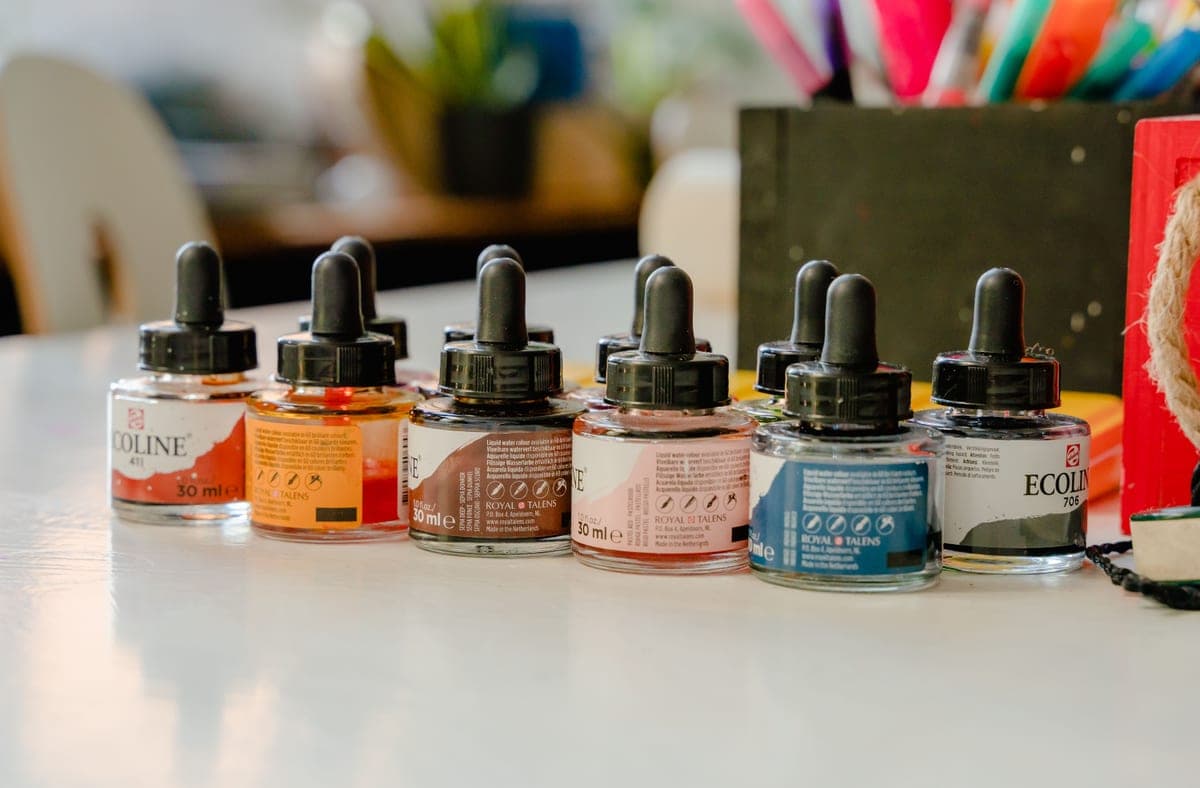
- Small bottles too. A 30 ml size exists for colors you want to try rather than commit to.
What you give up
Consistency across the range is the honest weakness. A range of this size is not going to behave uniformly, and some colors run wetter, drier or more saturated than their neighbors. Premium ranges are narrower and more consistent precisely because they are narrower.
You also get no published data whatsoever — no drying time, no water resistance, no lightfastness. That is true of nearly every ink maker, but it is worth restating on a page recommending a range this large.
Where Diamine fits in a collection
| Purpose | Range | Why |
|---|---|---|
| A safe first bottle | Waterman | Forgiving, easy to flush, unremarkable in the useful sense. |
| Experimenting with color | Diamine | Cheap enough per bottle that a mistake costs nothing. |
| A pleasure ink for good paper | Iroshizuku | Shading and flow that show on coated paper. |
| Permanence | Platinum Carbon or Noodler's | Pigment or bonding chemistry. |
| Cheap paper | Pelikan 4001 | Dry flow, less liquid into the fibers. |
The shimmer warning
Diamine's range includes shimmer inks with suspended metallic particles. They are striking and they are not a beginner purchase: the particles settle, the pen needs regular agitation, and the feed needs cleaning far more often. Buy one when you have a pen you are willing to maintain, not before - the shimmer ink page sets out which nibs can pass it and which bottles to start with.
Diamine's greens are a better place to start, and four of them appear in the green ink roundup sorted from an almost-black green-black to an unmistakable emerald.
Questions people actually ask
Is Diamine ink good?
Yes, and it is the best value in fountain pen ink by volume. The trade for a range this large is consistency: some colors run wetter or drier than others, where a narrower premium range is more uniform.
How big is a Diamine ink bottle?
The standard bottle is 80 ml, with a 30 ml size available for colors you want to try rather than commit to. Eighty milliliters is realiztically more than two years of ordinary use.
Are Diamine shimmer inks good for beginners?
No. The suspended metallic particles settle in the bottle and in the pen, so they need regular agitation and much more frequent cleaning. Start with a standard dye ink.
Diamine or Iroshizuku?
Diamine for volume and experimentation, Iroshizuku for shading and flow on good paper. On cheap paper or in a very fine nib the difference between them largely disappears. Every maker compared sets out what each range is actually for.